![Featured image of post Review : The Hundred Line - Last Defense Academy [2025]](/post/review-thehundredline/100-cover_hu_7eabe2adb883bd09.jpg)
I’ve always been enamoured with the idea of a story that has multiple outcomes, one that allows the reader to be a participant and actively guide it onto a different track. Video games seem like a natural home for this type of narrative since player choice is a primary element of them, but in practice this is often a far more thorny proposition than it would seem due to the sheer amount of writing, art, programming, and sound design that needs to be coordinated to bring the vision to life. Many games try this, few truly succeed, and the vast majority end up making major compromises to end up with a shippable title.
The Hundred Line - Last Defense Academy is a game that takes this ambition and runs as far as it possibly can with it, resulting in a work that is one of the most impressive pieces of interactive fiction I’ve ever seen. Though it is far from perfect, the sheer variety of stories told based on the choices of the player make it a unique gem, and something well worth playing if this is your type of story. The developer, Too Kyo games (founded by Danganronpa’s Kazutaka Kodaka and Kotaro Ushikoshi of Zero Escape fame) by all accounts bet the entire farm on this game’s success, and fortunately it has resonated with both critics and players.
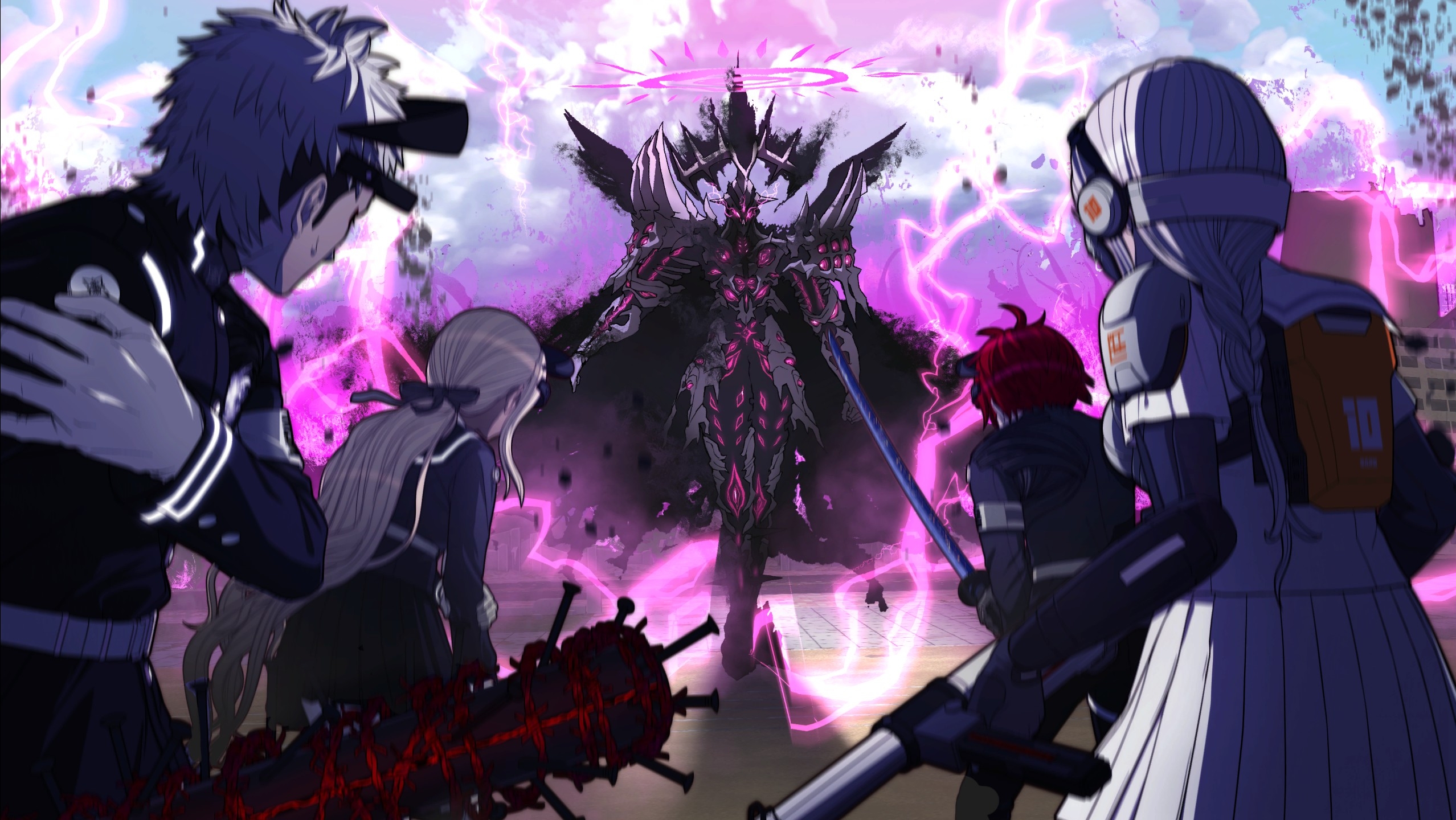
The Hundred Line bears a resemblance to some familiar japanese RPG narratives such as Persona, but many of these similarities are only skin deep; it truly does feel like a fusion of the chief creatives’ prior works. The player takes the role of Takumi Sumino, a high-schooler whisked away from his peaceful life in the dome-like Tokyo Residential Complex and alongside a cast of delightfully weird characters, is tasked with defeating mysterious invaders in order to defend a secret inside the titular Last Defense Academy that could spell salvation or doom for all of humanity. The game primarily presents its story in a traditional visual novel format, but also features grid-based tactical battles where you command the Special Defense Unit members in protecting the school.
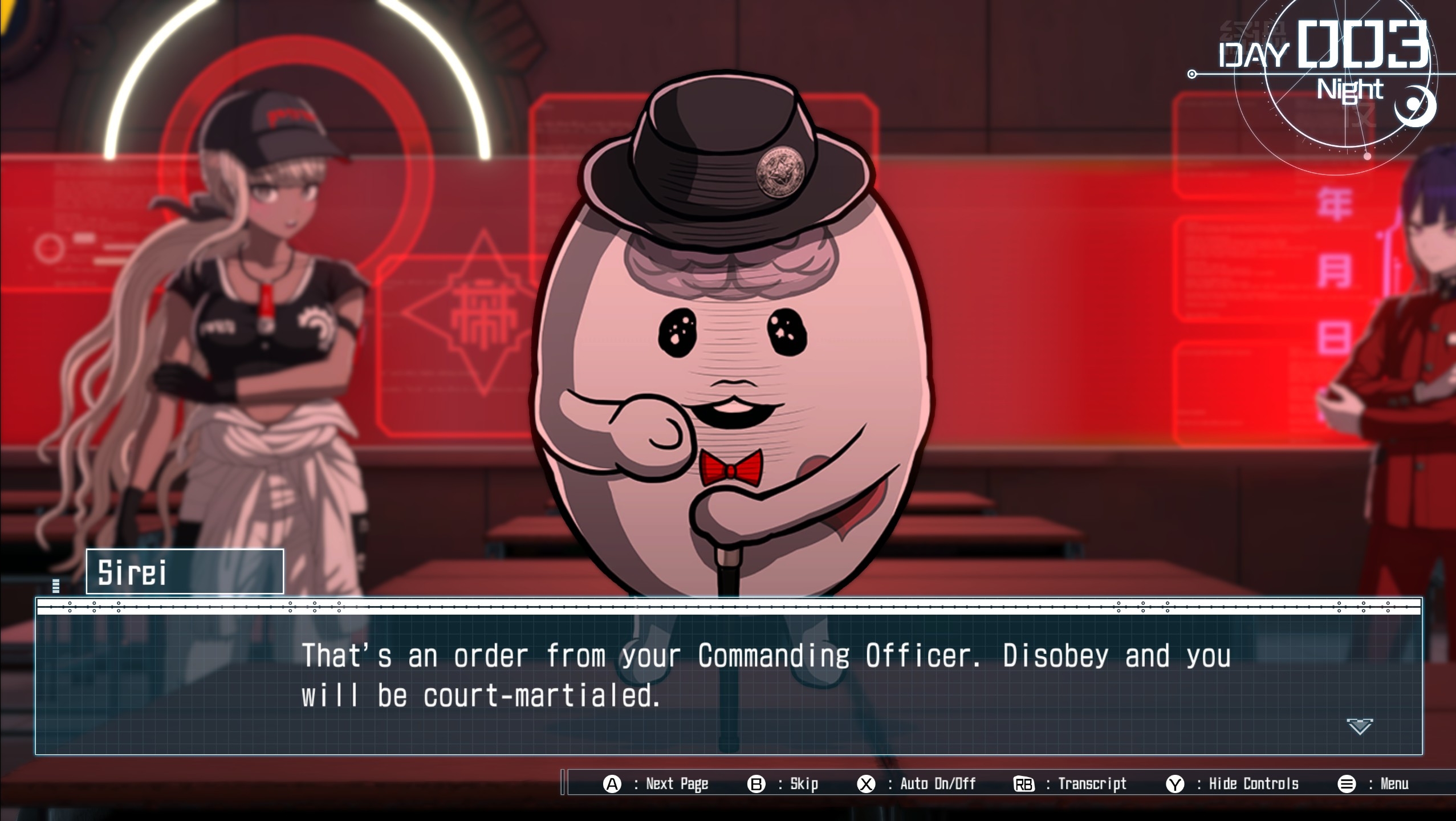
In all the media promotions I saw for The Hundred Line, the branching narrative and importance of player choice was often touted as a major factor. This could easily lead to some confusion though, as the first part of the story (“Route 0”) acts as an extended onboarding to the game and its large cast of characters and will take somewhere around 20 to 25 hours to complete. That’s not to say that it’s at all boring; it’s a fully-fledged narrative with lots of interesting twists and turns. Sacrifices will be made and truths will be revealed, culminating in the end of the route at Day 100. In the end, Takumi is left with a feeling of emptiness, having lost several of his comrades and wondering what he could do differently if he were able to do it all over again.
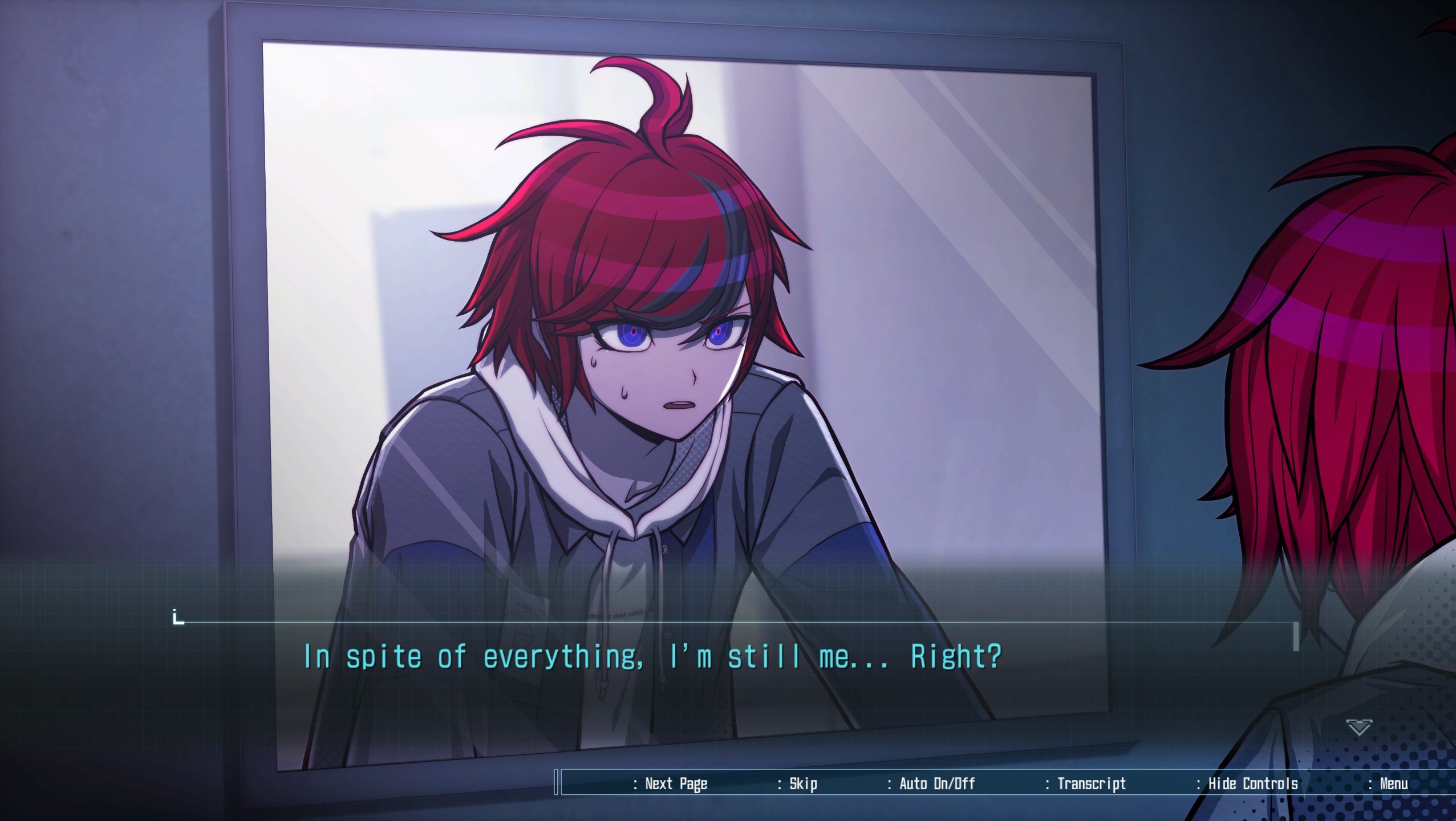
The Special Defense Unit members fight their battles using a power called Hemoanima, basically blood magic, which has mysterious properties that manifest differently in every user. It is also cannibalistic, meaning that it becomes stronger when the user drains the blood from another Hemoanima user. After reluctantly draining several other users, Takumi’s innate power to rewind individual turns in battle becomes supercharged and he is able to wind back the clock all the way to the beginning of the 100-day cycle at the school. He does so, and so begins the real meat of the game. Welcome to The Hundred Line - Last Defense Academy 2!
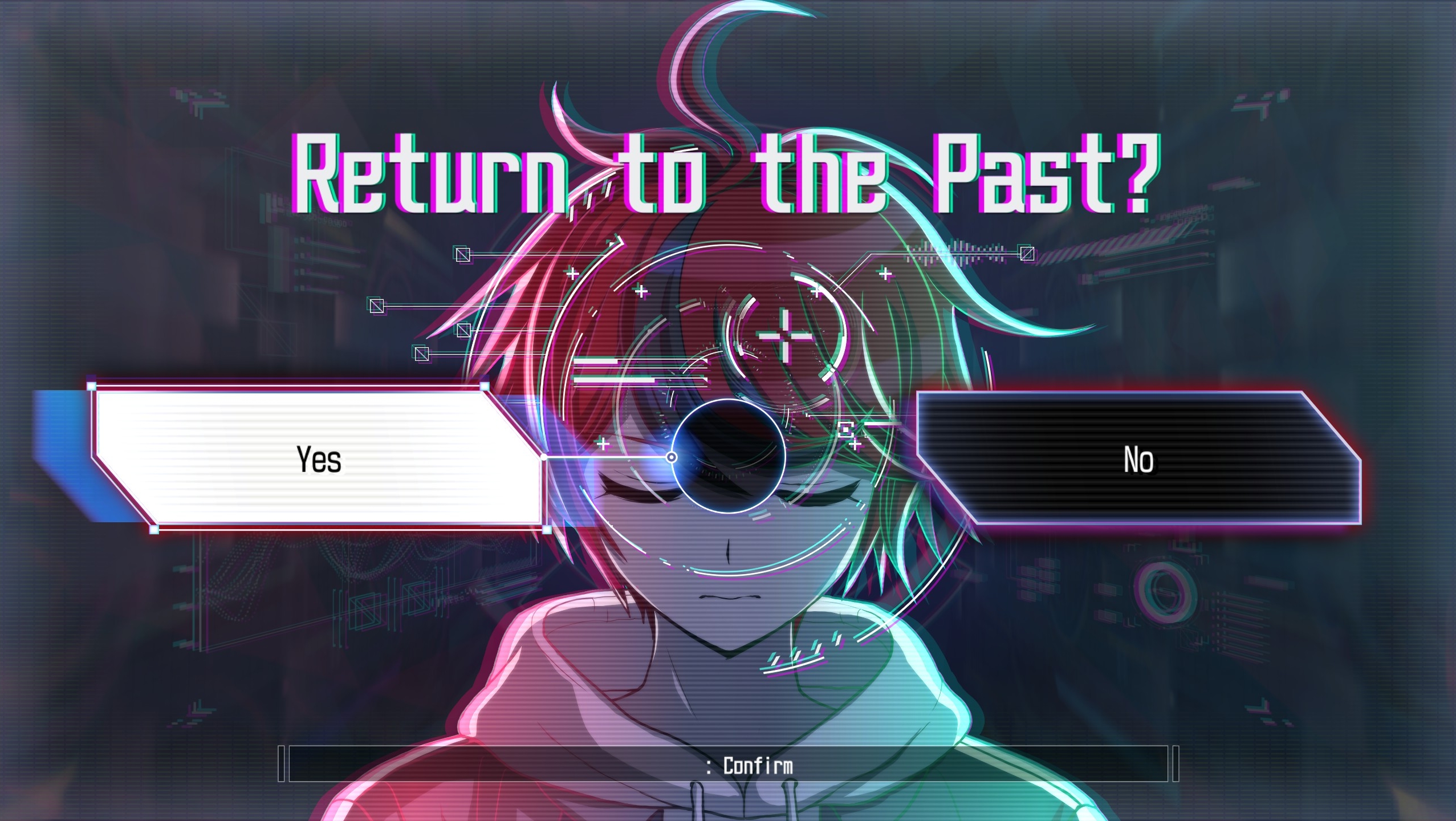
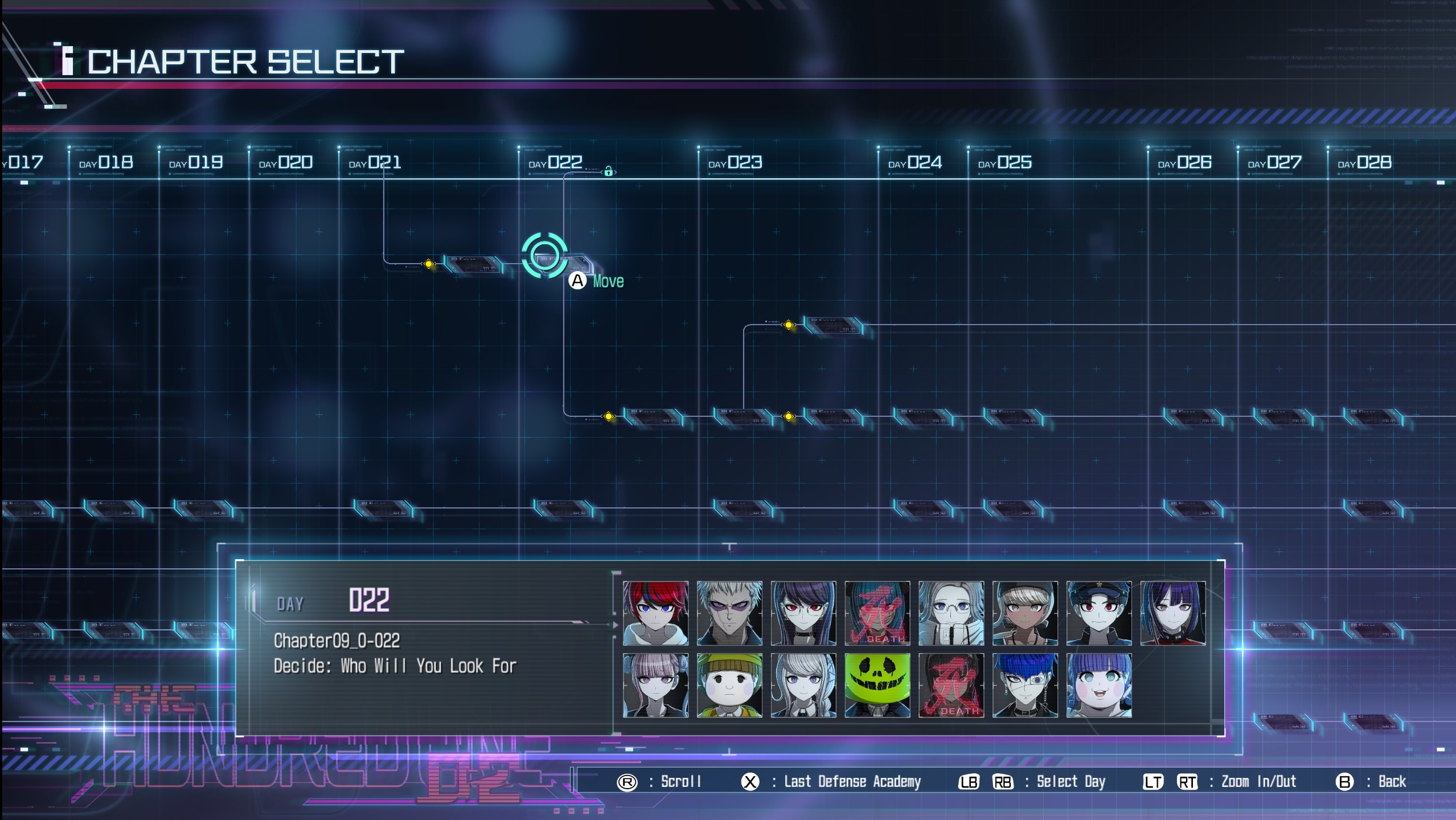
Takumi returns to the past with full knowledge of the events to come and immediately sets out to change history for the better. Almost immediately you’ll be confronted with heavy decisions that will drastically alter the timeline and thus the fate of the members of the unit. Some of these decisions lead to very unexpected places, but fortunately in the second portion of the game you’ll have access to a timeline map that allows you to jump back and forth between any branch or go back to any individual decision and see the alternative, all while keeping your progress. This is very welcome, because these diverging storylines can be so radically different that it’s inevitable that you’ll end up living through consequences you didn’t foresee. There is a proper “second scenario” written by Kodaka (and many excellent story branches off of this mainline) that culminates in an excellent-if-bittersweet ending, but also timelines that dip into almost any genre you could imagine. There is a route where there is a serial killer offing the unit members one by one, a slapstick comedy route, a sci-fi story (written by Ushikoshi), a horror/zombie tale, and even a route where Takumi unwittingly becomes a cult leader.
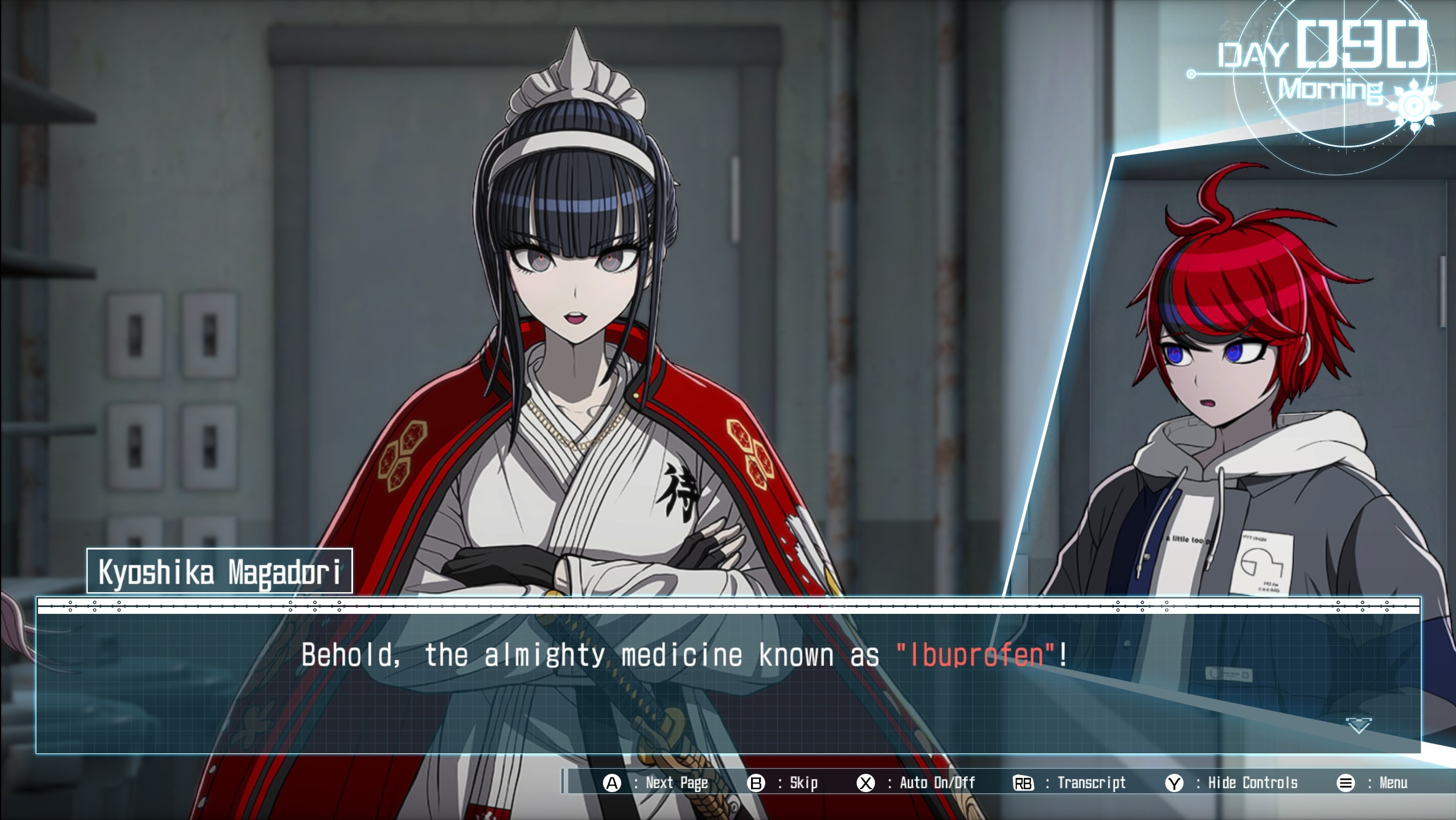
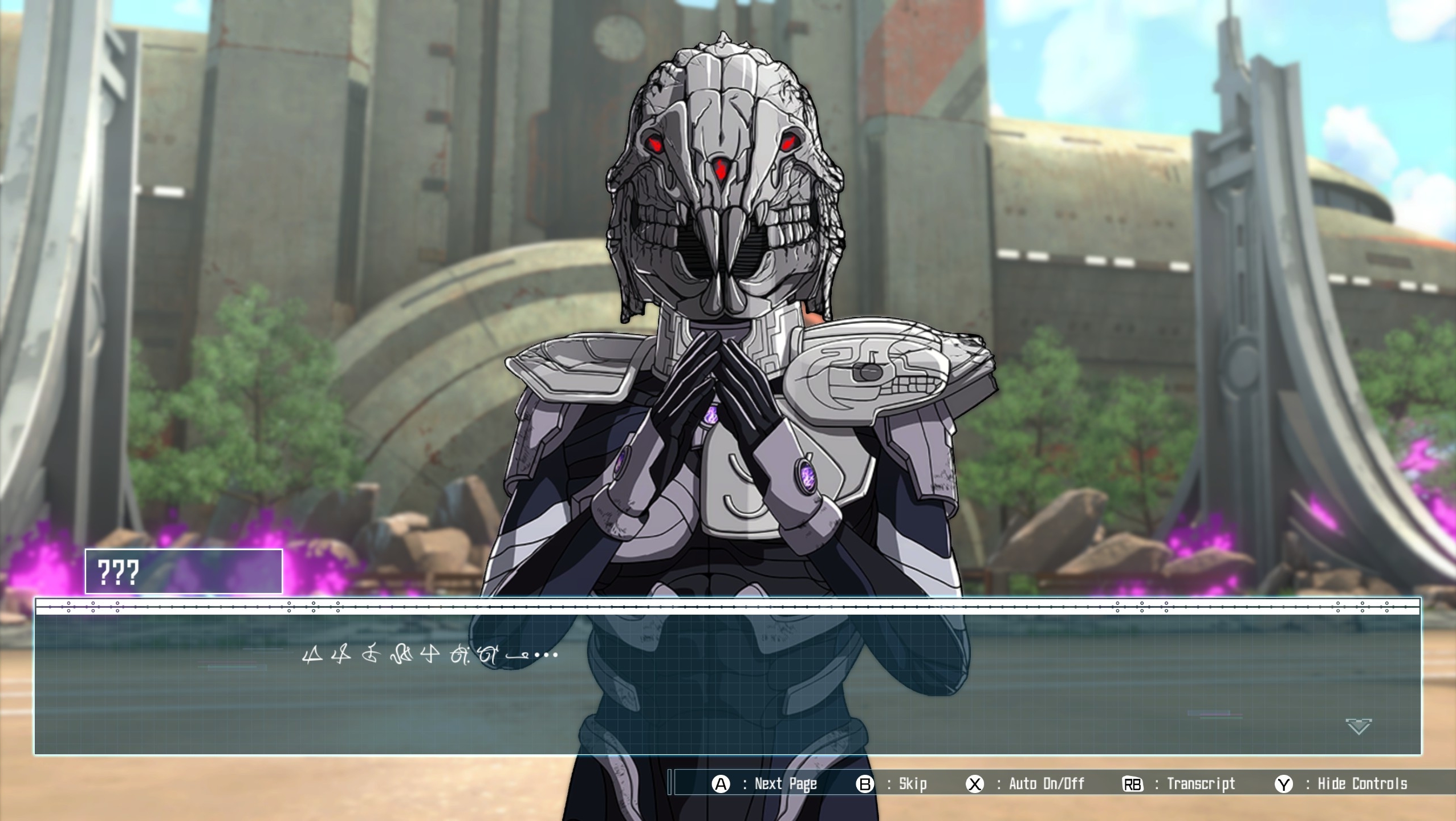
There are 22 main branches in all, and 100 unique endings split between them. These feature tons of unique pieces of art and are interspersed with voice acting to bring the characters to life. I cannot imagine how much of a task it was to coordinate all of these different timelines; even though they go in radically different directions they all share a central core of facts between them, and Ushikoshi’s sci-fi route even expands upon the time-travelling narrative and Takumi’s knowledge of other parallel realities. All of these are canon according to the devs, so players are free to pick which ending they prefer the most as their own personal canon.
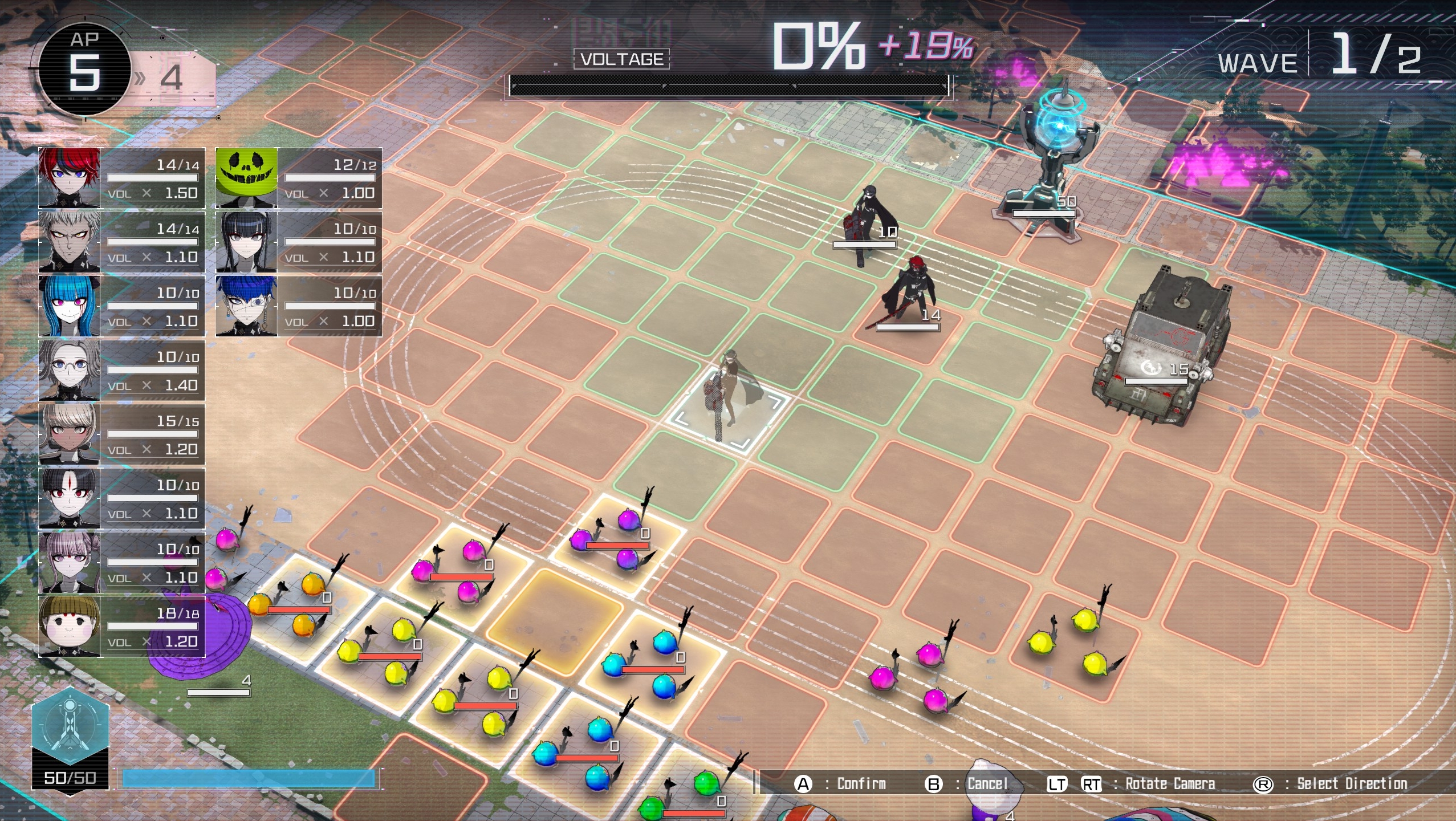
So I’ve talked quite a bit about the story so far - what about the battles? Well, as a turn-based tactics fan I’m pleased to report that they are quite solid. I found the battles to be an enjoyable, almost puzzle-like experience; all characters have a set of 3 standard moves that can be upgraded with materials found through battles and exploration sequences, and all are completely different in terms of what they excel at i.e. clearing weak chaff enemies, focusing down elites, buffing allies, building up armor and tanking hits from large foes, etc. Furthermore each character has an ultimate attack used by consuming portions of the voltage meter, which is built up by damaging enemies or taking other defensive actions. These attacks are powerful and can wipe out a massive group of enemies all at once, and can even be used as a desperation attack at low health, which uses zero voltage but kills that character for the rest of the wave (slain allies revive between waves). Clearing medium and large enemies give back AP, which you can use to take additional actions on your turn. This makes for an interesting dynamic where you can smartly use your voltage to clear a big group of heavies, refunding enough AP to chain action after action, wiping out the majority of enemies in a single turn. This is where the puzzle-like element comes in, and it’s very satisfying to work out a sequence of actions that clears the board of the majority of enemies in one fell swoop.
Alas, for all the strengths of this game it is still far from perfect. As enjoyable as the battles are, they start to become repetitive in the second portion of the game. You’ll often see repeats of the same battles or minor variations thereof, and the vast majority of them (but not all) are defensive battles at the school. Fortunately you can skip any battle you’ve seen previously and keep most of the rewards from winning, but despite this being a necessary quality-of-life feature, it makes the battles feel somewhat superfluous once you’re deep enough into the game. The branching story route structure is wildly creative but is also uneven in places. The sheer amount of writing that needed to go into this game necessitated splitting up the authorship duties between Kodaka, Ushikoshi, and several other support staff and guest writers. Characterization is not always totally consistent and certain routes feel like they were truncated due to a lack of time (see that article I linked above). This may be controversial but I do think seeking out a “skip list” in order to avoid the weakest storylines is totally reasonable, because the best storylines in the game are in fact VERY good. Certain routes such as Second Scenario, Retsnom, S.F., and Killing Game are widely regarded as some of the best material these devs have ever written and should be sought-out. I’d still recommend playing the game and picking whichever options seem right for your first couple of runs, however. Some of these twists are just too good to risk spoiling.
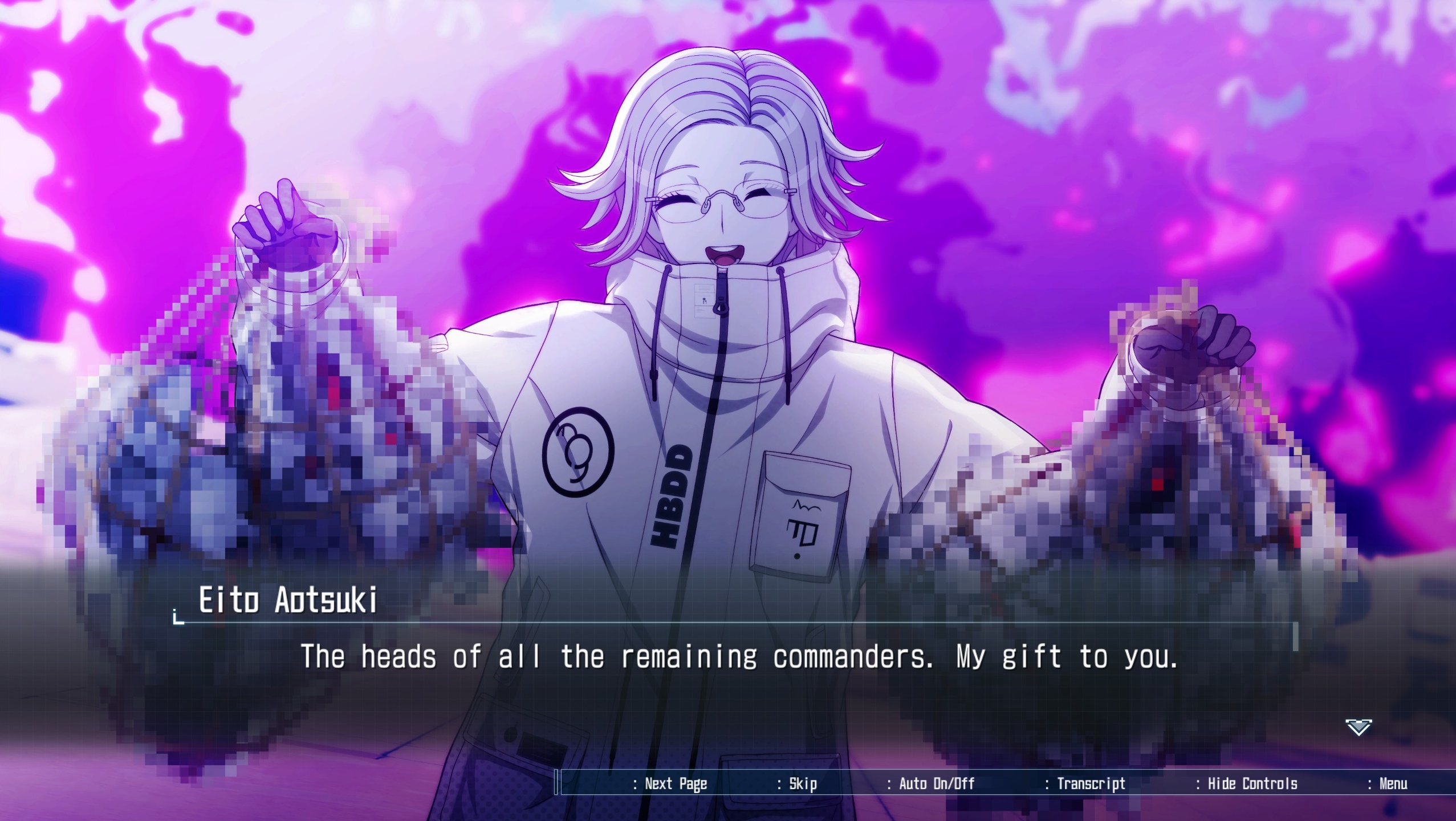
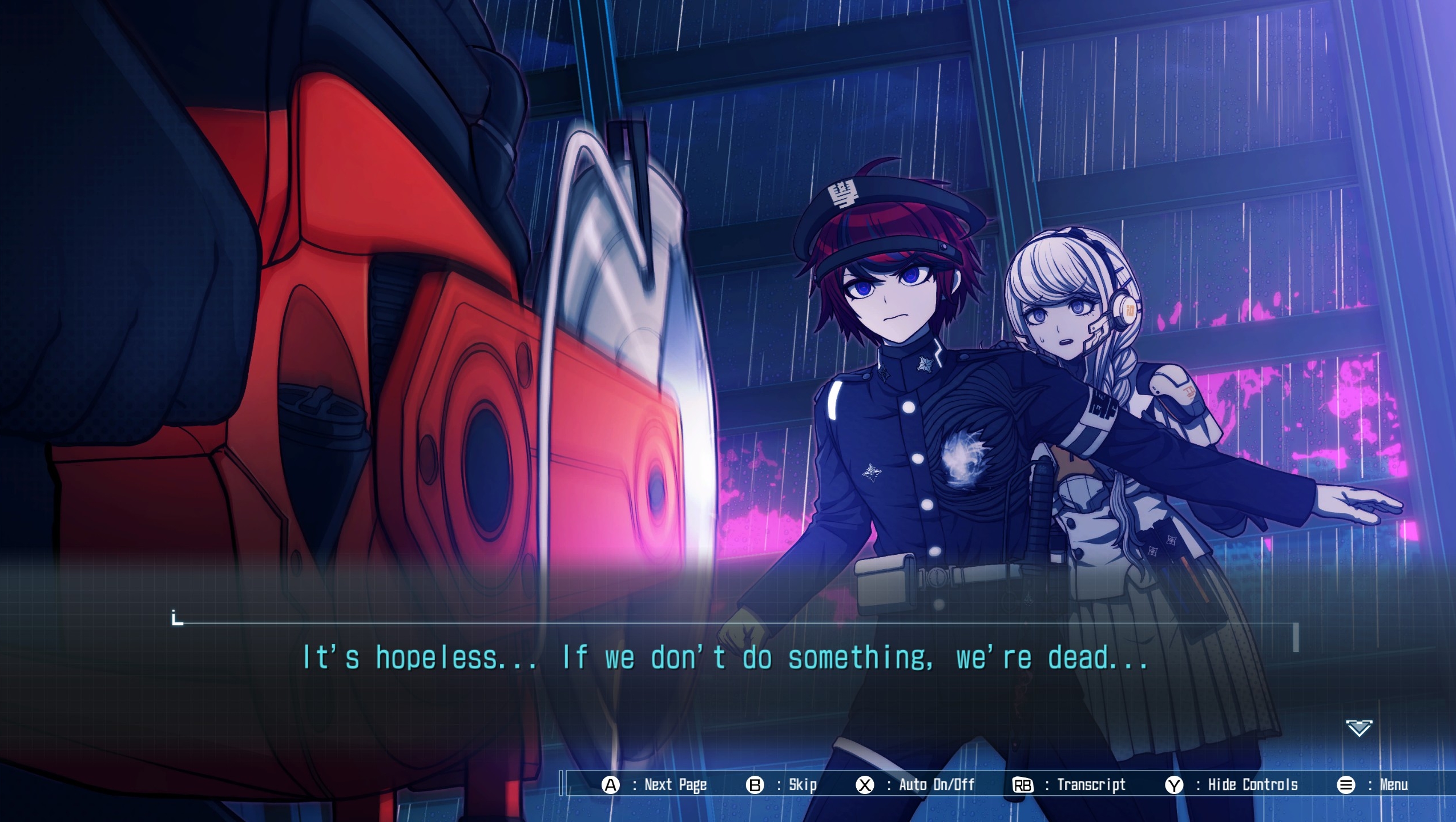
The Hundred Line - Last Defense Academy may not always be banging on all cylinders, but when it’s good it’s among the best video game storylines I’ve ever experienced. Its characters can lean into tropes but also show a level of depth at times that will surprise you. If you appreciate the art of interactive storytelling, it’s an ambitious experiment that is well-worth experiencing.
|
84
|
|