Cover photo from Mewgenics.
Well so much for February being a shorter, quieter month and this post being less effort than January’s. Aside from finishing up a few games I started playing in the months prior, February also brought the release of the long-awaited Mewgenics from the creator of The Binding of Isaac. I also sampled the hot new friendslop game and discovered a new platforming gem. There’s a lot to talk about, so let’s get to it.
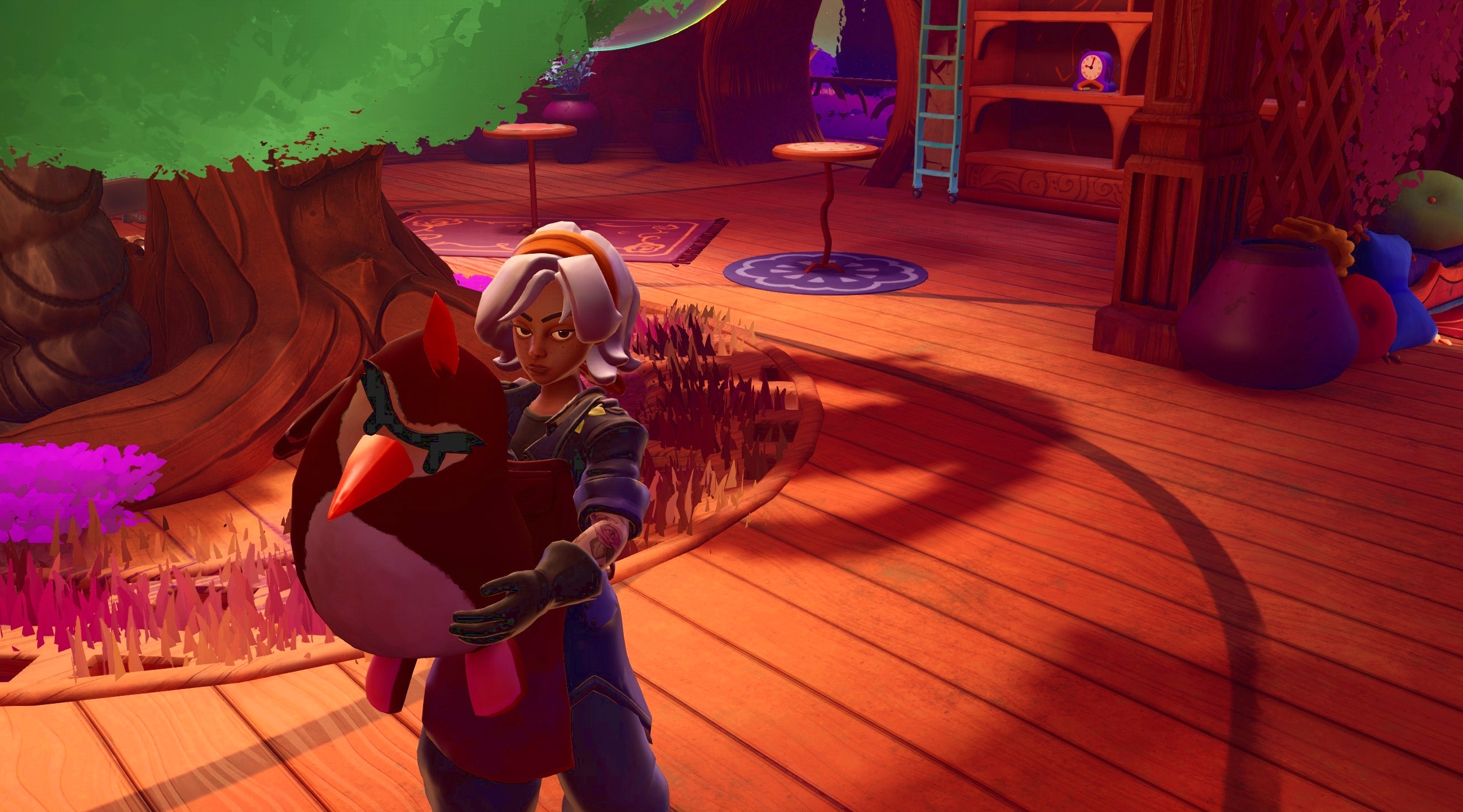
I’ve always felt a lot of tension between the part of me that wants to just go with the flow and chill, and the voice in my head that won’t stop screaming that my time on this earth is limited and I should spend as much time as possible bettering myself, having unique experiences, and generally trying to not waste a single moment. Alta, the protagonist of Wanderstop, has only heard that second voice throughout her entire life. She’s an arena fighter who is perpetually driving herself to train harder, to be the best, to never lose a match. After three years of being undefeated, she begins to suffer loss after loss after loss. Beaten-down and psychologically shattered, she sets off to find a legendary master in the forest who she thinks she can train her back to her former greatness.
Things, of course, don’t go as planned. Collapsing from exhaustion, she finds herself awakening at the tea shop Wanderstop, having been carried there by its kind and gentle owner Boro. No matter how much she tries, she collapses when trying to resume her journey and it turns out she can’t even lift her sword anymore for some reason. Boro invites her to stay a while, to rest and to heal. She does so reluctantly, learning how to make tea, tend the garden, decorate the shop, and converse with the odd smattering of visitors that meander into the clearing where the shop resides. Whether she realizes it or not, all of these visitors have a valuable lesson to teach, if she’ll only listen.
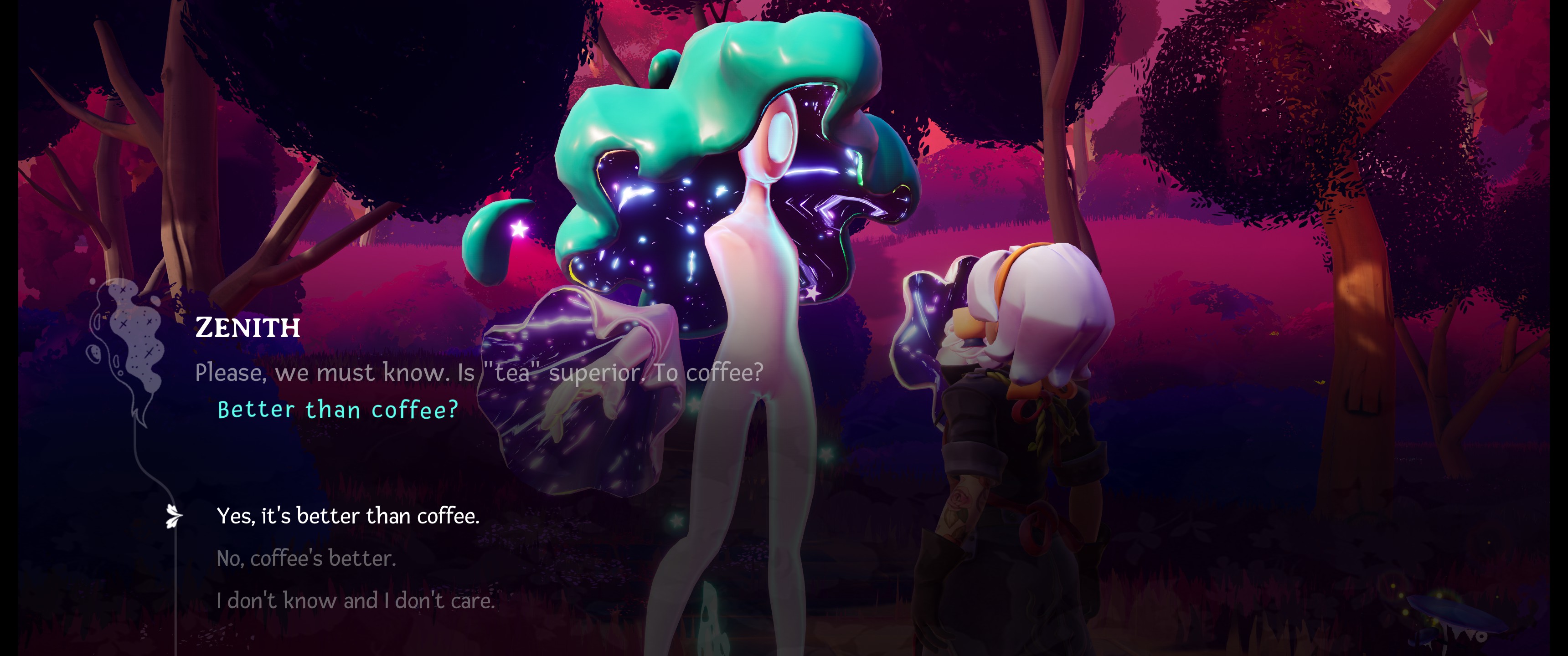
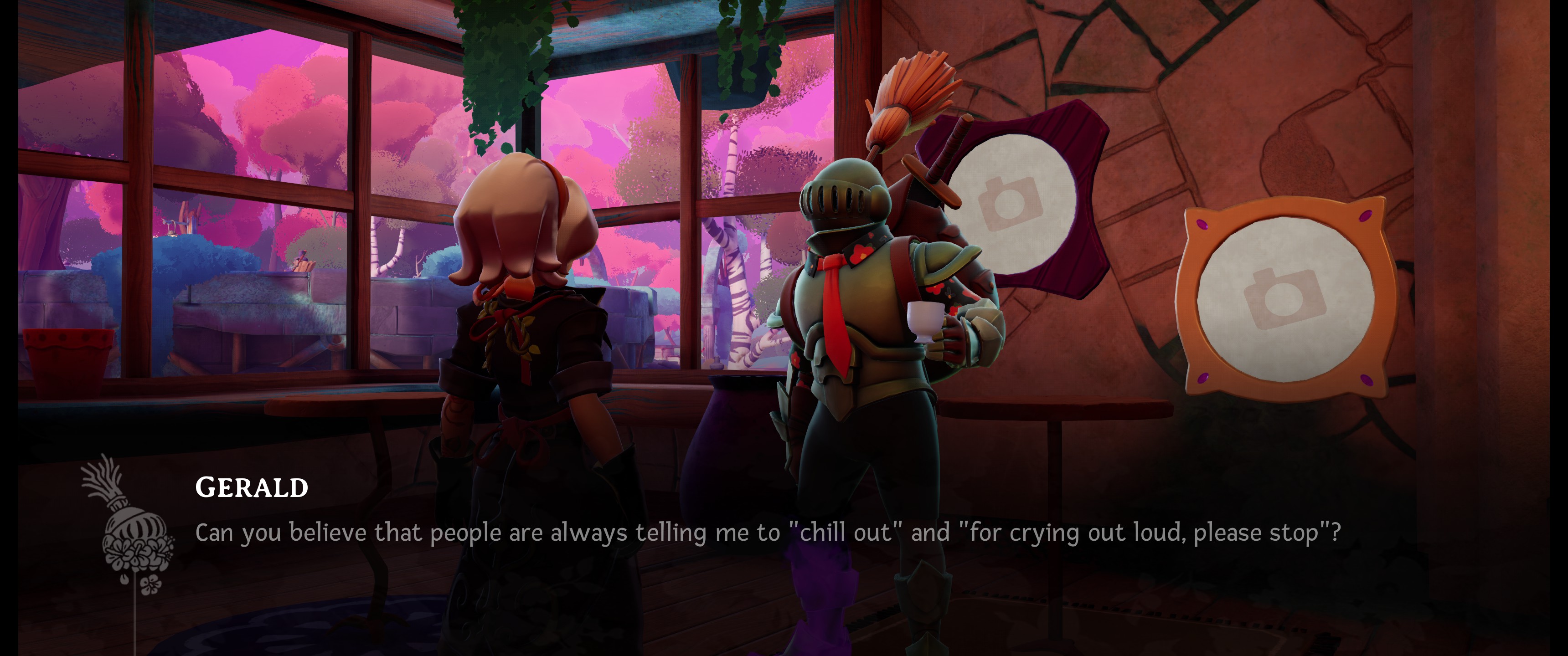
Wanderstop is a cozy game with a poignant message for any of us who have that innate drive to try to optimize our time spent down to the minute. There is no time pressure on any of the game’s tasks, the environment is comfortable and relaxing, and Boro is endlessly supportive as Alta works through her burnout and comes to terms with the fact that nothing lasts forever. It’s about becoming more assertive with that inner voice and learning to live a more examined life. It’s about the ephemerality of our identity and how it naturally changes over time; how elements of our lives that once defined us fade into the background and we perpetually reinvent ourselves.
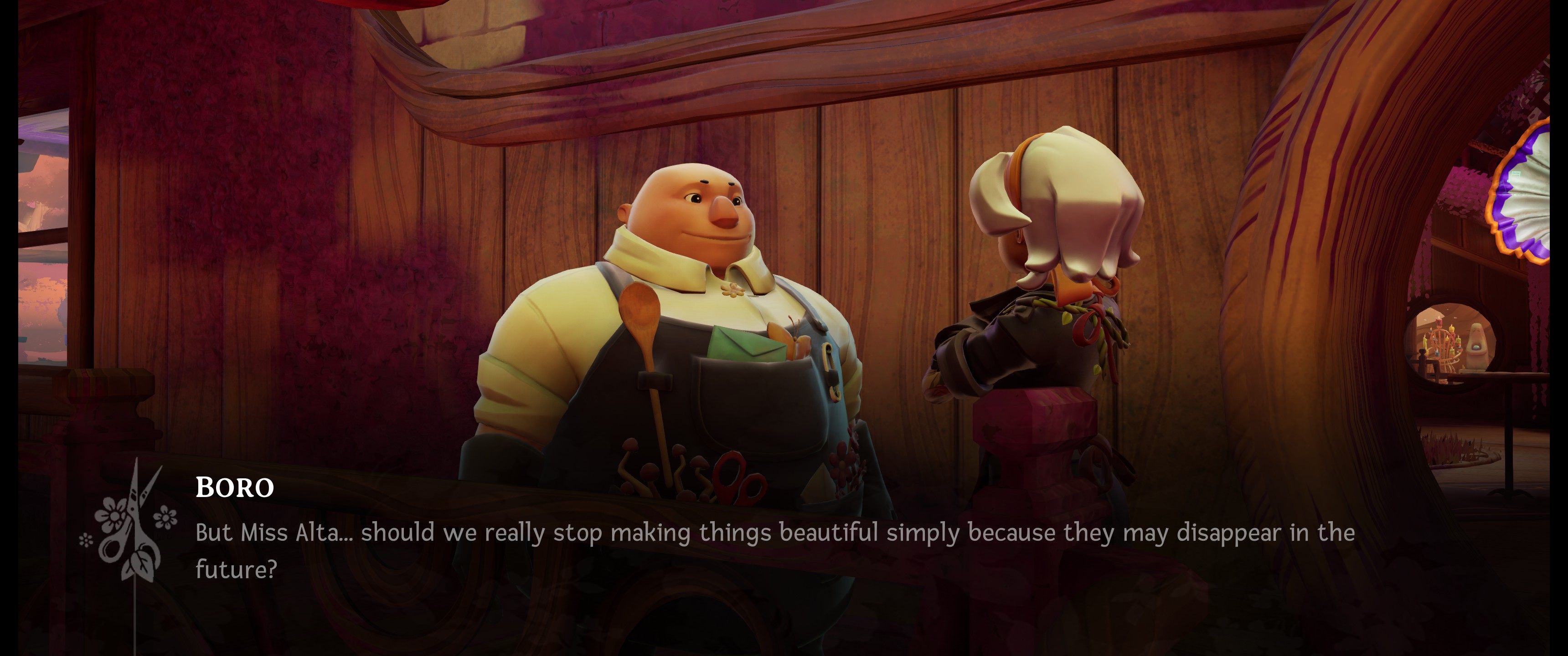
It’s a funny thing when your opinion on a piece of media grows and changes the more you turn it over in your head, and the more time passes since experiencing its conclusion. There were times while playing Wanderstop when I found it mildly tedious or a little dull, but as the end of the game crept closer and closer I found myself feeling prematurely nostalgic for my time in the tiny clearing in the forest. I wanted to spend just a bit more time brewing tea for the quirky characters who wandered through and chatting with the kindly proprietor. Boro actually tells you toward the end that you should take a little bit of time to choose what you want to do before you leave, and to try to simply let yourself be bored. That is, in the end, the message that Wanderstop wants to leave us with : that life cannot and should not simply be reduced to an endless series of to-do lists. The truth of what it had to say rang true to me; we owe it to ourselves to just slow down and be alone with our thoughts, simply enjoying a coffee or tea and taking in the simple joys of a beautiful day. I think it’s in those moments we can reflect upon what truly matters to us.

Finally, after about putting about 100 hours into this game and seeing 52 endings, I have emerged from the (metaphorical) Weeb Cave and am finally ready to talk about The Hundred Line – Last Defense Academy. This is a visual novel/tactics hybrid that has a positively absurd number of choices to make and storyline ramifications to observe that result from said choices. It’s like one of those choose-your-own adventure books brought to life in interactive media. Although it’s uneven in some ways, I enjoyed it quite a bit and admire the ambition and passion behind it. I had enough to say about it that I wrote a full review of it which can be read here.
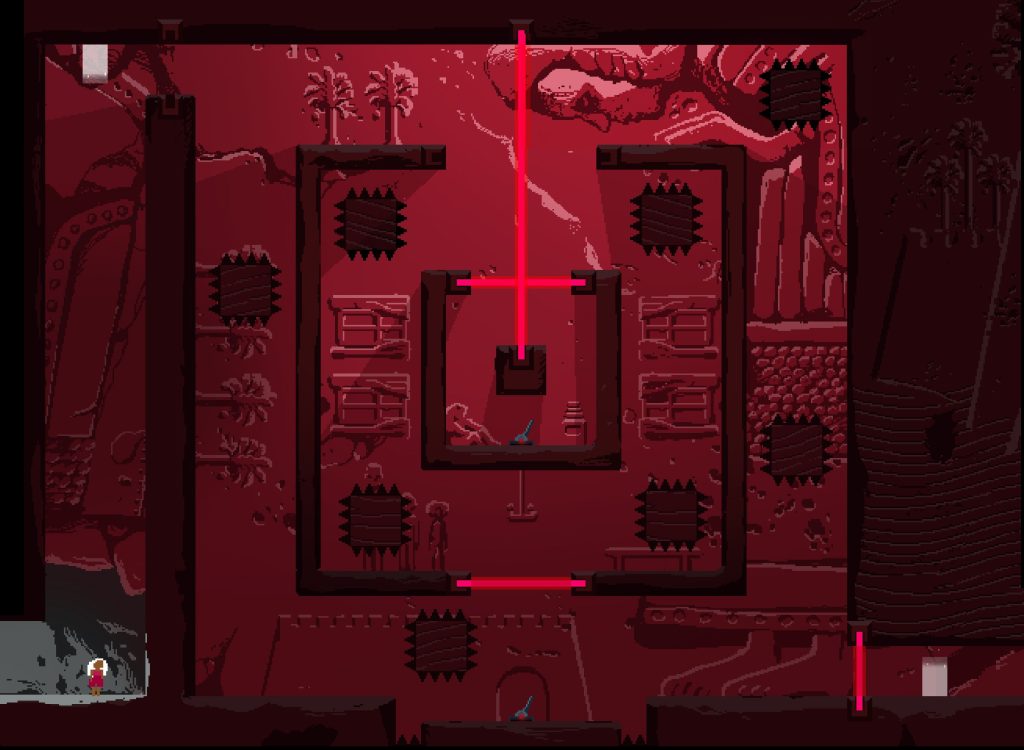
This one was a pleasant surprise. The Remap Radio podcast posted an interview with developer Toby Alden and after hearing him describe his game Love Eternal as a “psychological horror precision platformer,” I knew I had to give it a look. It actually reminds me a lot of VVVVVV (which you should also play) for its gravity-swapping mechanic, and its spike-filled rooms are bite-sized bits of extreme platforming challenge. Unfortunately the game lacks accessibility settings, so if platformers aren’t your genre it’s going to be a tough sell.
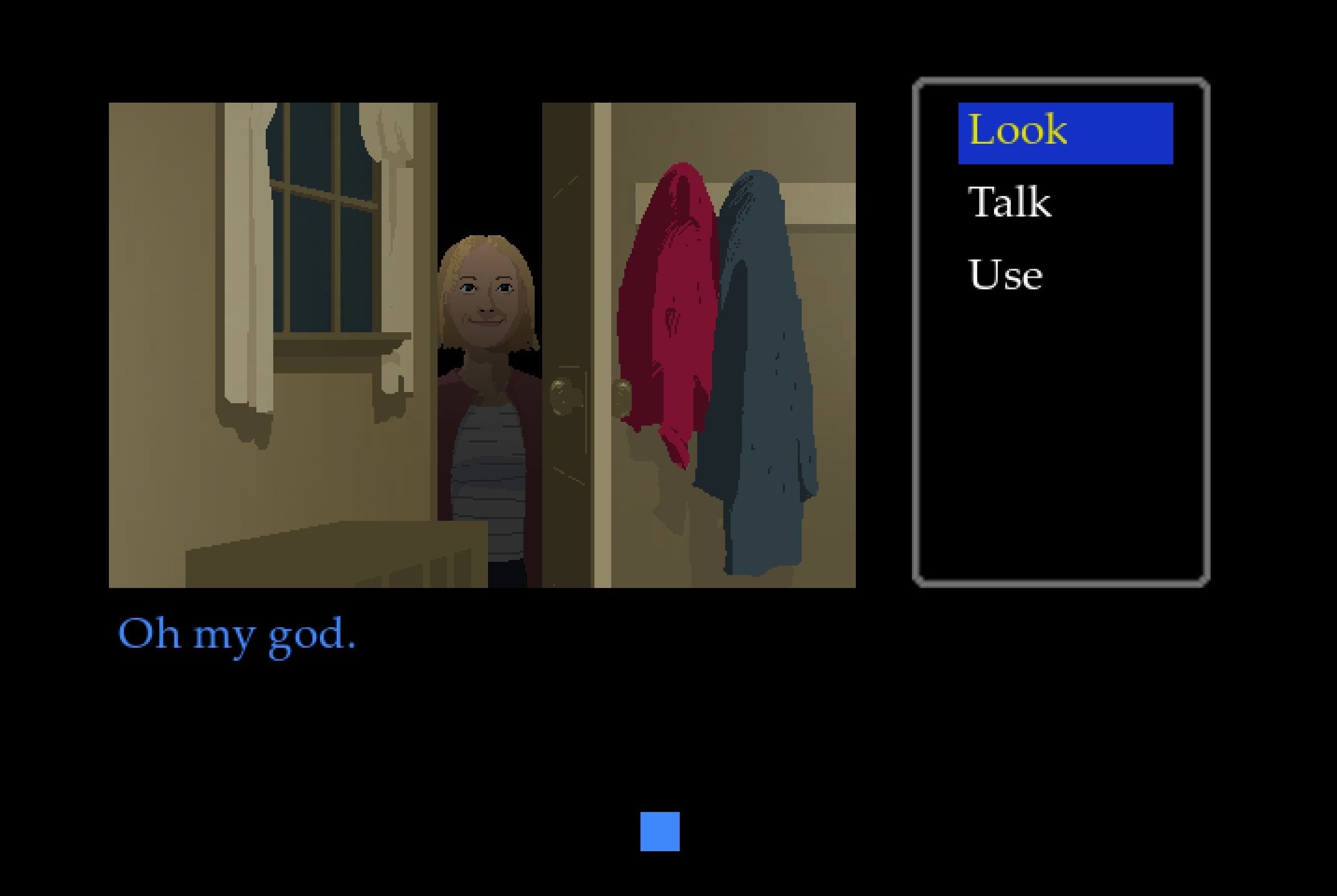
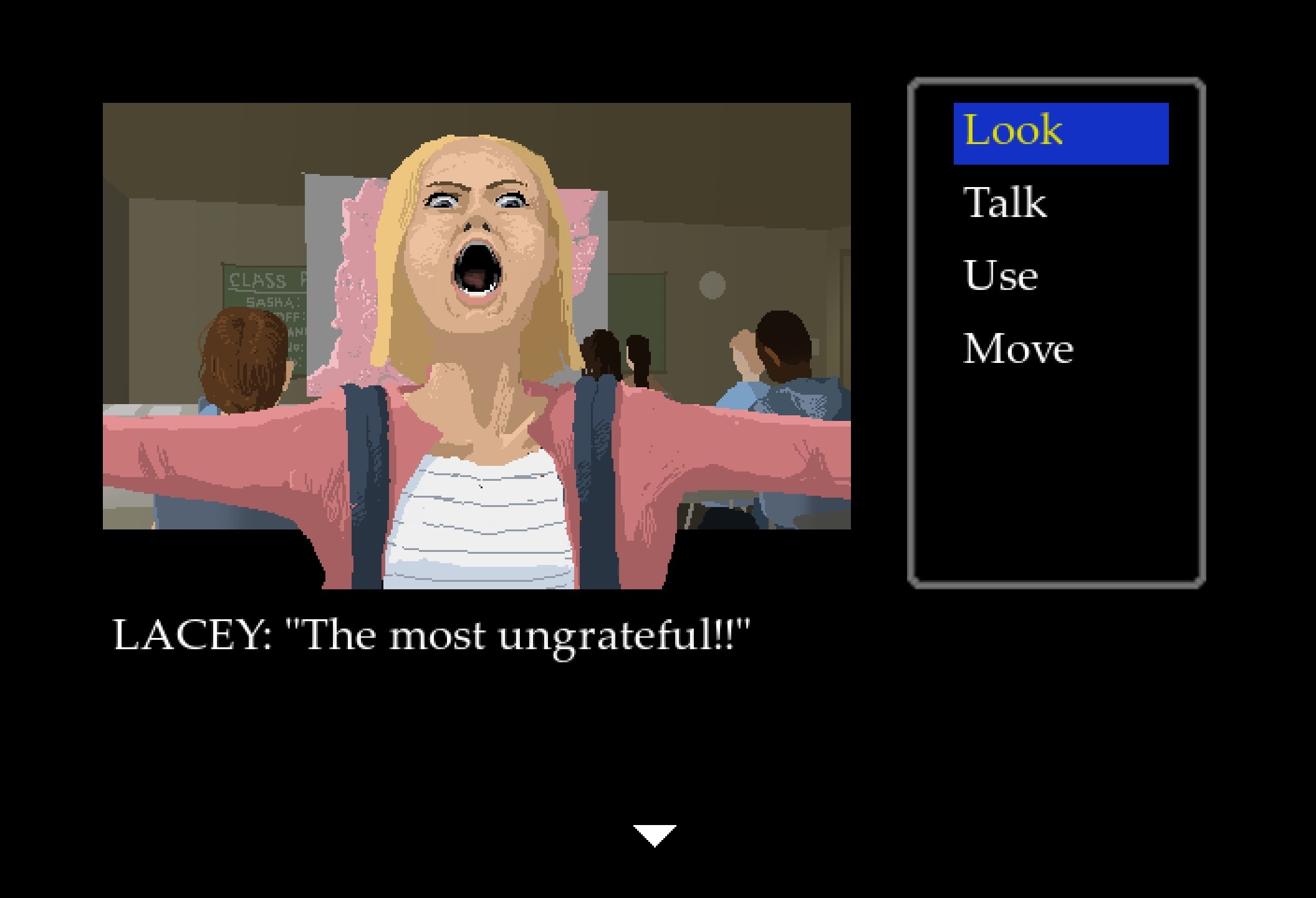
The game’s vibe is genuinely unsettling without resorting to cheap scares though, and is well-worth the price of admission if you can handle the difficulty. Its gameplay sections are also broken up by adventure game-esque segments that reveal more of the main character Maya’s story and the bizarre things that begin to happen to her, mostly centered around her interactions with her friend Lacey. It also does something kinda wild in its last act that I’ve legitimately never seen another game do before, and I refuse to spoil this. Get to it, my fellow platformer sickos.
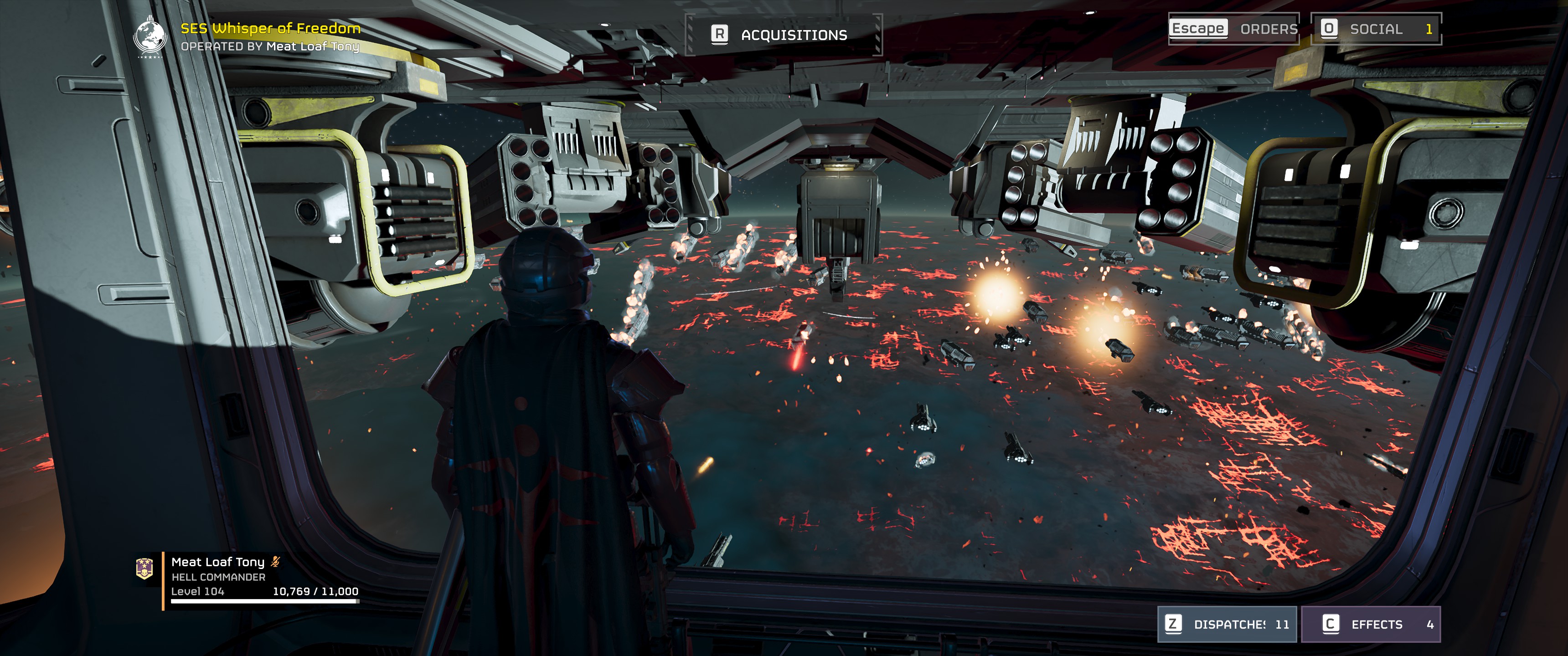
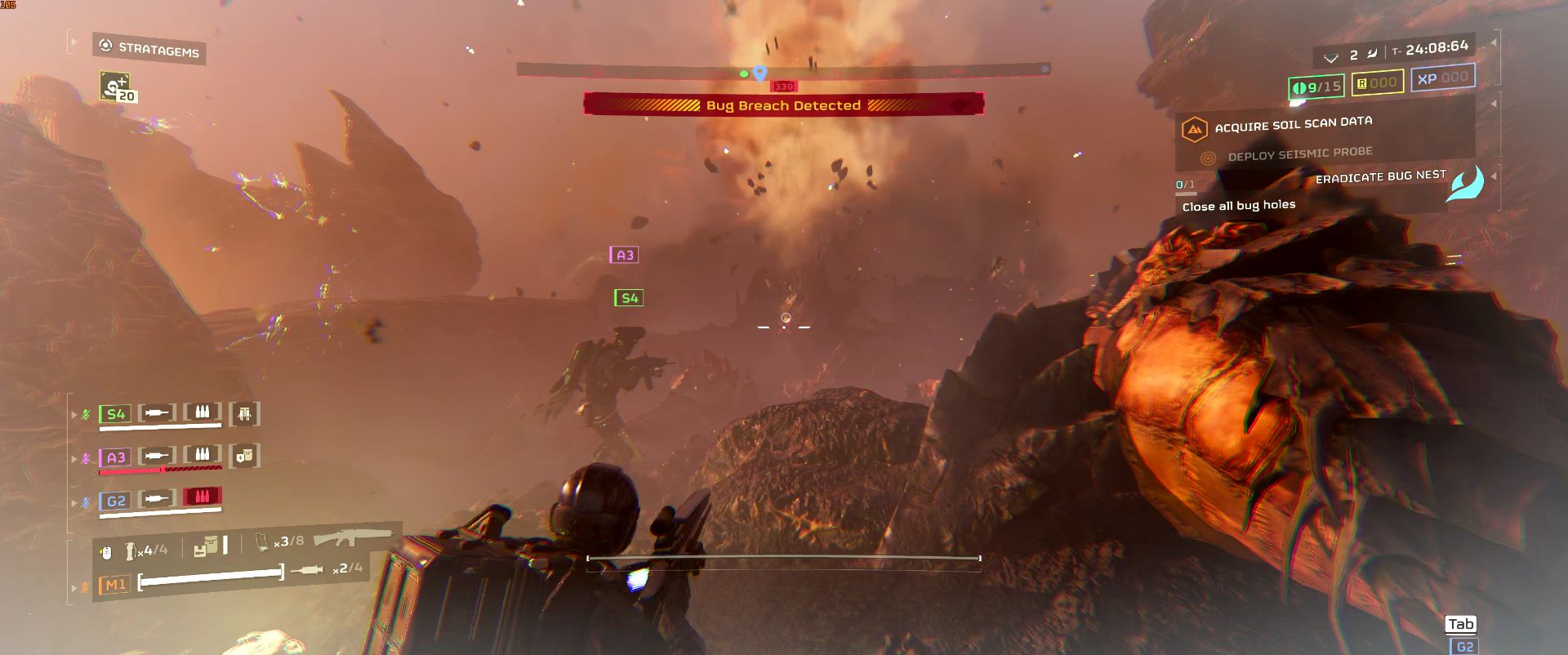
This third-person shooter/excessive force simulator from Arrowhead is a game I still keep up with, hopping in to check out the newest developments in the galactic war at its center and to play with all the new destructive toys. It helps a lot that it’s basically the only game that my partner plays at this point, and also that her mother wanted to learn to play it with us as she starts her retirement. It’s been an honestly fascinating process teaching her; there are so many things you take for granted about games if you grew up with them that aren’t immediately apparent that need to be explained to someone brand-new to gaming. We’re all having a great time though, and have gotten many clippable moments like this :
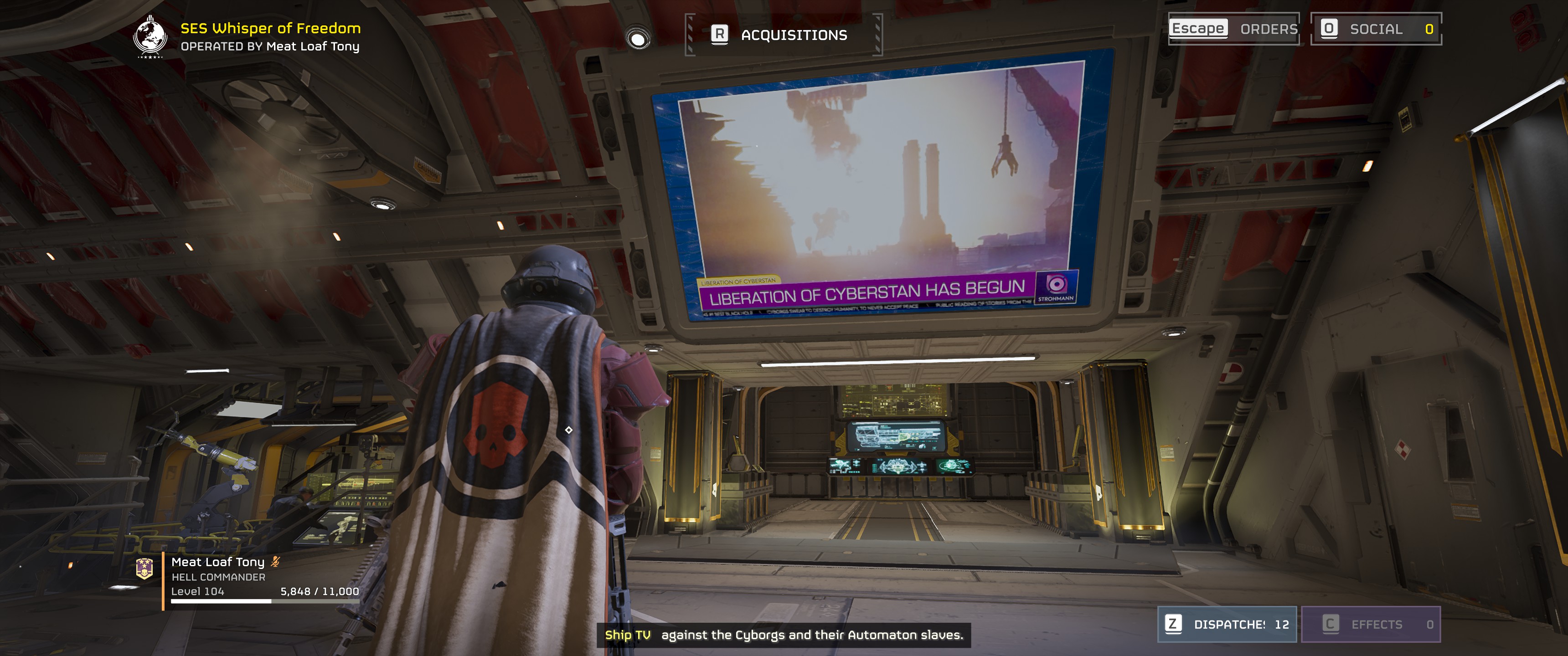
Teaching new Divers aside, the game masters have led us into a campaign against the Automatons and their masters the Cyborgs, all the way to their homeworld of Cyberstan. There are new units, new objectives, and the campaign on Cyberstan has been legitimately challenging. This is where I need to rant a bit though… Not about the game itself, but the community of players engaging with it.
Sure, in any live service game there’s always going to be some amount of power creep, and Helldivers II is no exception. Helldiver armaments have continually gotten stronger while enemies have mostly stayed the same. The new units attempt to shake up this dynamic somewhat and bring back some of the difficulty for the most hardcore players. People claim they want challenge but in fact so many gamers scream bloody murder when novel challenges force them outside their established comfort zone. It’s gotten to the point that when the controversy around difficulty reaches a fever pitch I just have to tune out because it gets so toxic. So many feel like it’s a personal affront to their ego to bump the difficulty down a few levels (there are 10 for crying out loud) so that they can refine their tactics and re-learn what works and what doesn’t. Arrowhead isn’t perfect but I think they’ve done a fairly good job overall when it comes to game balance lately.
Sorry, just had to get that out. I feel better now. Thanks for coming to my TED Talk. Anyways, Helldivers II is still a great time with friends (or family!) and I still highly recommend it.
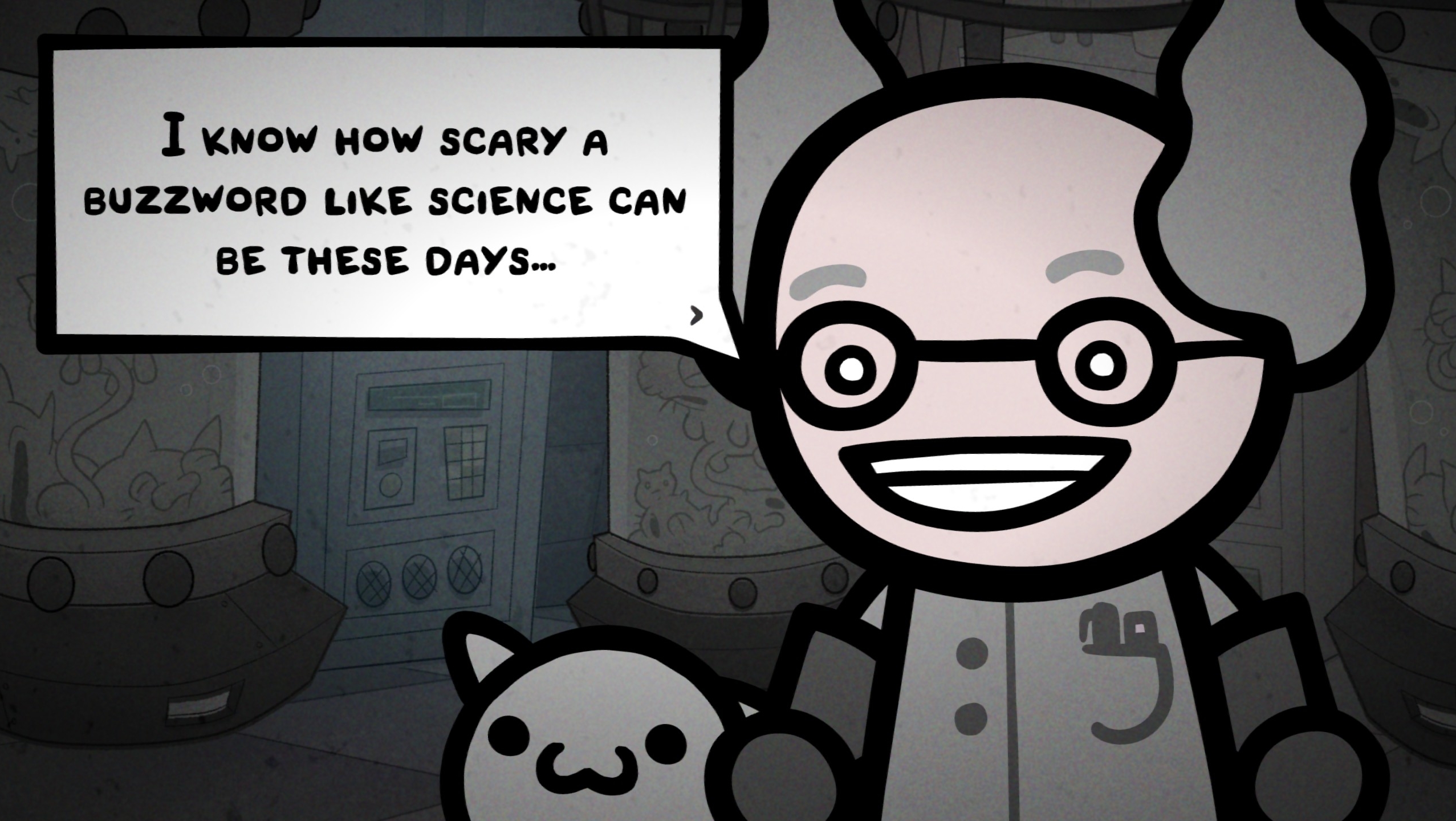
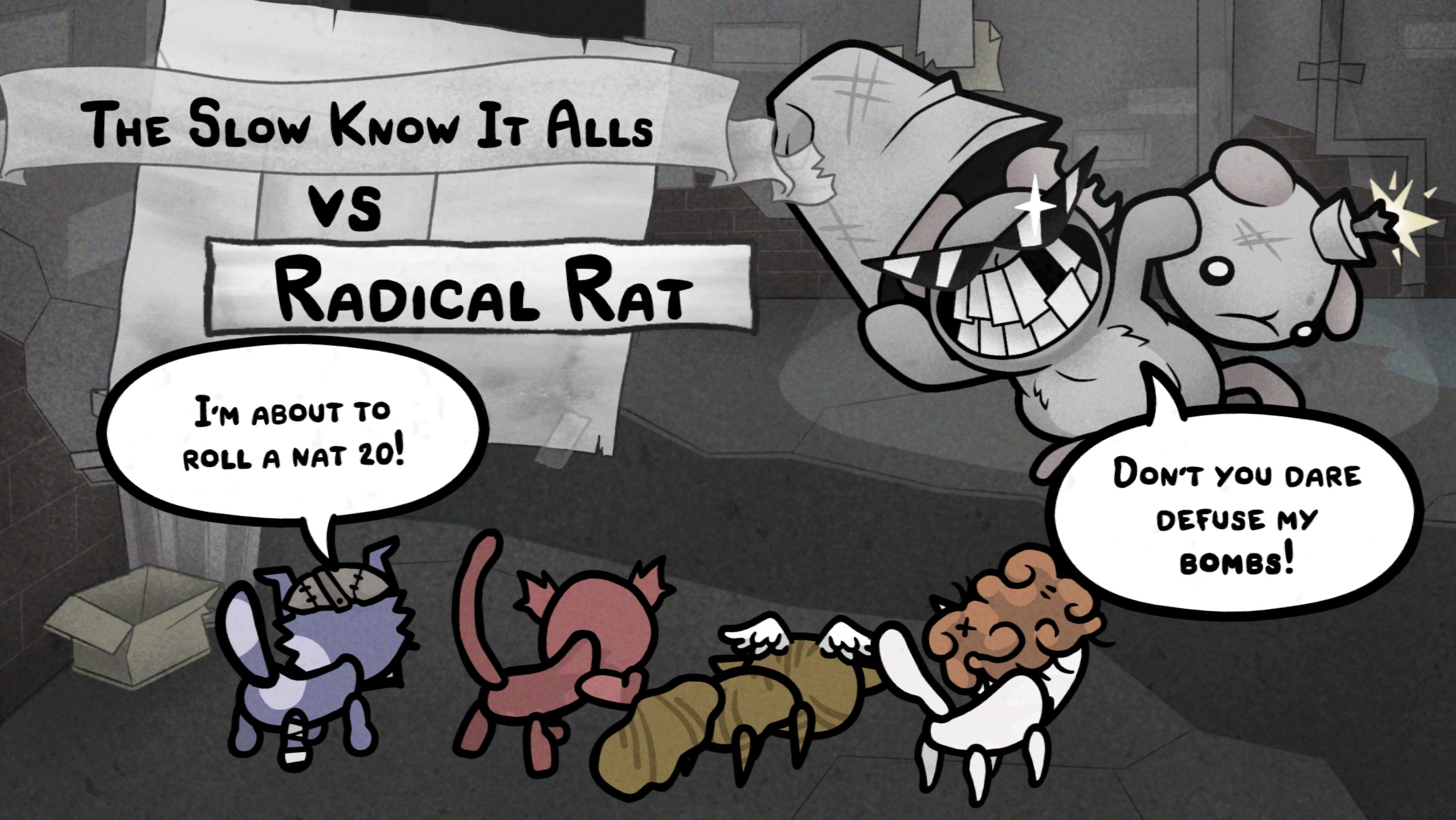
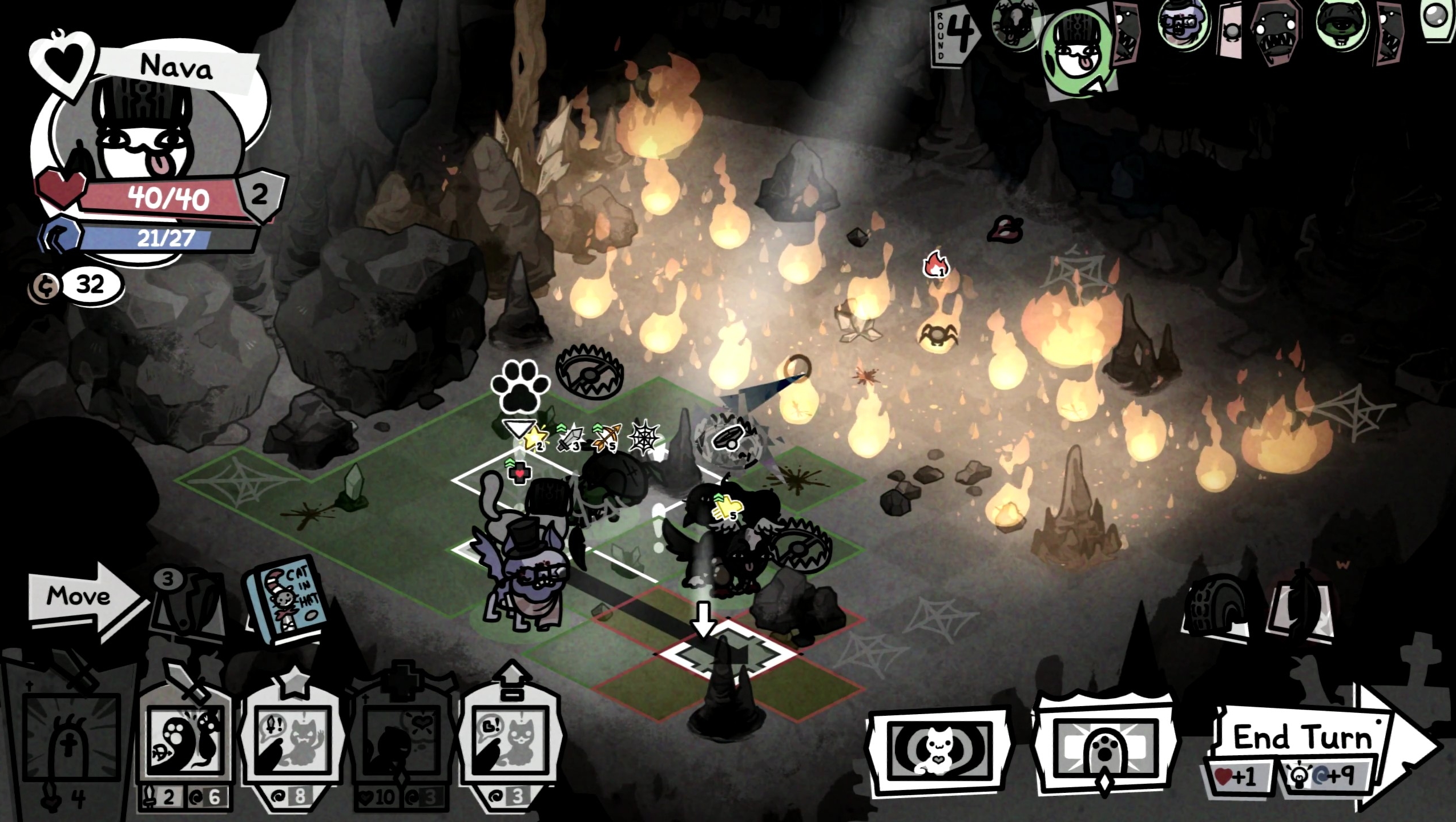
It’s hard to believe that in the year 2026 we’re finally playing Edmund McMillen and Tyler Glaiel’s Mewgenics. Originally announced in 2012, canceled in the mid 2010s, and then revived in 2018, the duo’s feline magnum opus has finally seen the light of day. If you’ve played McMillen’s previous game The Binding Of Isaac you kind of know what to expect from this game’s overall tone and artwork style, which is to say that it’s a lot of crass humor, poop and fart jokes, you get the picture. Some people will undoubtedly bounce off of it for that reason, but those that stick with it will find an incredibly deep and satisfying roguelite tactics game where you outfit a group of stray cats to go out on adventures and then come home to breed and raise the next generation of fighting cats. The art is reminiscent of 2000s Newgrounds animations (true to McMillen’s origins) and the music is another high point in its favor. It’s full of jazzy, jaunty tunes with lyrics that reveal themselves when you reach the boss encounter. It’s the kind of soundtrack that burrows into your brain and refuses to leave; I have legitimately lost sleep because I can’t get this damn song out of my head.
When I say this game is deep, I really mean DEEP. I’ve seen accounts of people spending upwards of 100, 200, or even more hours exploring the depths of Mewgenics. There are over 1000 unique skills for your cats to use and 900+ items on a sliding scale of grossness to equip them with. That plus the massive enemy variety ensures that almost no two runs are the same. Between this and Silksong, it’s been fascinating to see what passionate indie devs can do when given a long runway and essentially unlimited budget. I am admittedly very early in this game, only having played 18 hours and having barely scratched the surface of Act 2. I’m very much looking forward to sinking more time into it, though I’m also trying to pace myself knowing just how long of a journey it will be to the end.
Babe, wake up. New friendslop just dropped.
One of the greatest disappointments of my life happened when I was a teenager, browsing a local store that carried used classic video games. In these bins of plastic cartridges I found Lee Trevino’s Fighting Golf for the NES, and thought “huh, what an interesting concept,” and picked it up on a whim for like $2.50.
I regret to inform you that there is no actual fighting in Lee Trevino’s Fighting Golf.
There is a character in it called Big Jumbo, but that mildly amusing fact was no consolation for the total lack of fisticuffs. I wanted to thwack my opponents with a 5-iron or throw down on the links Happy Gilmore style!
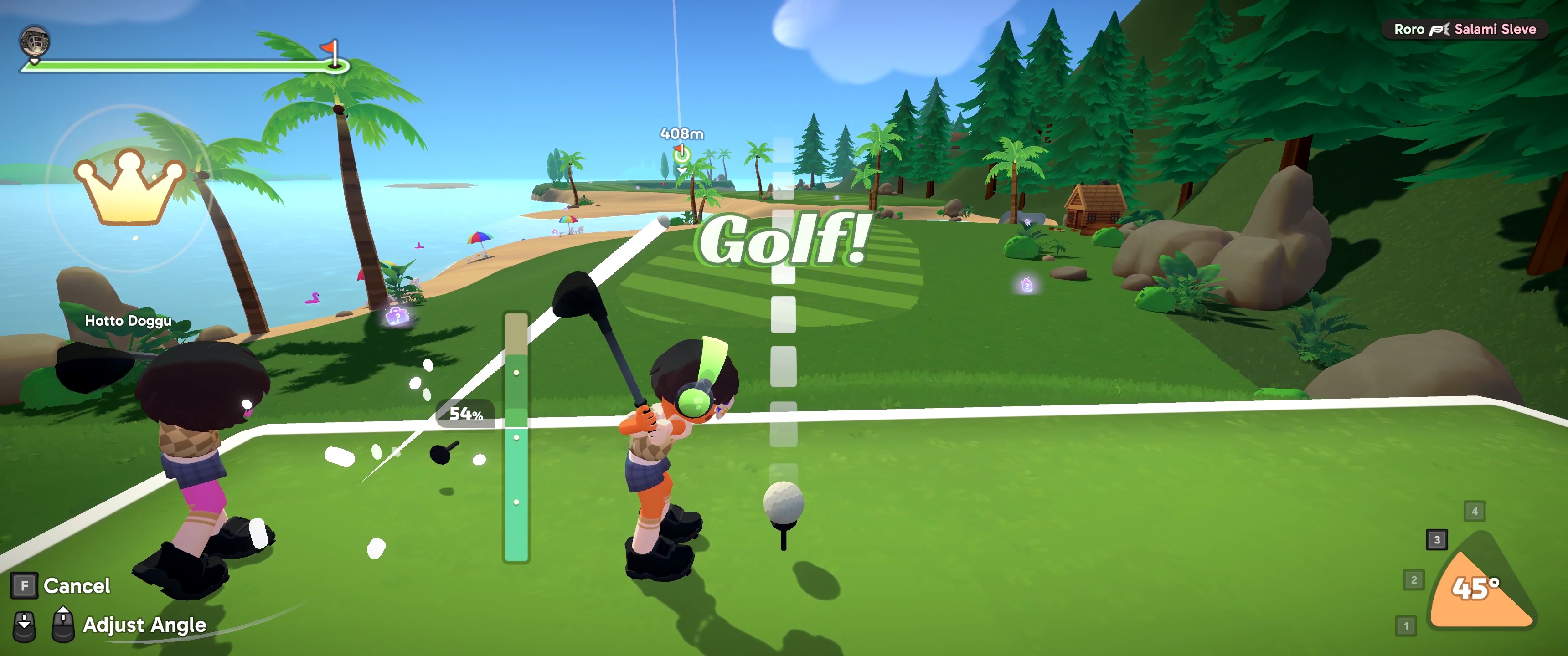
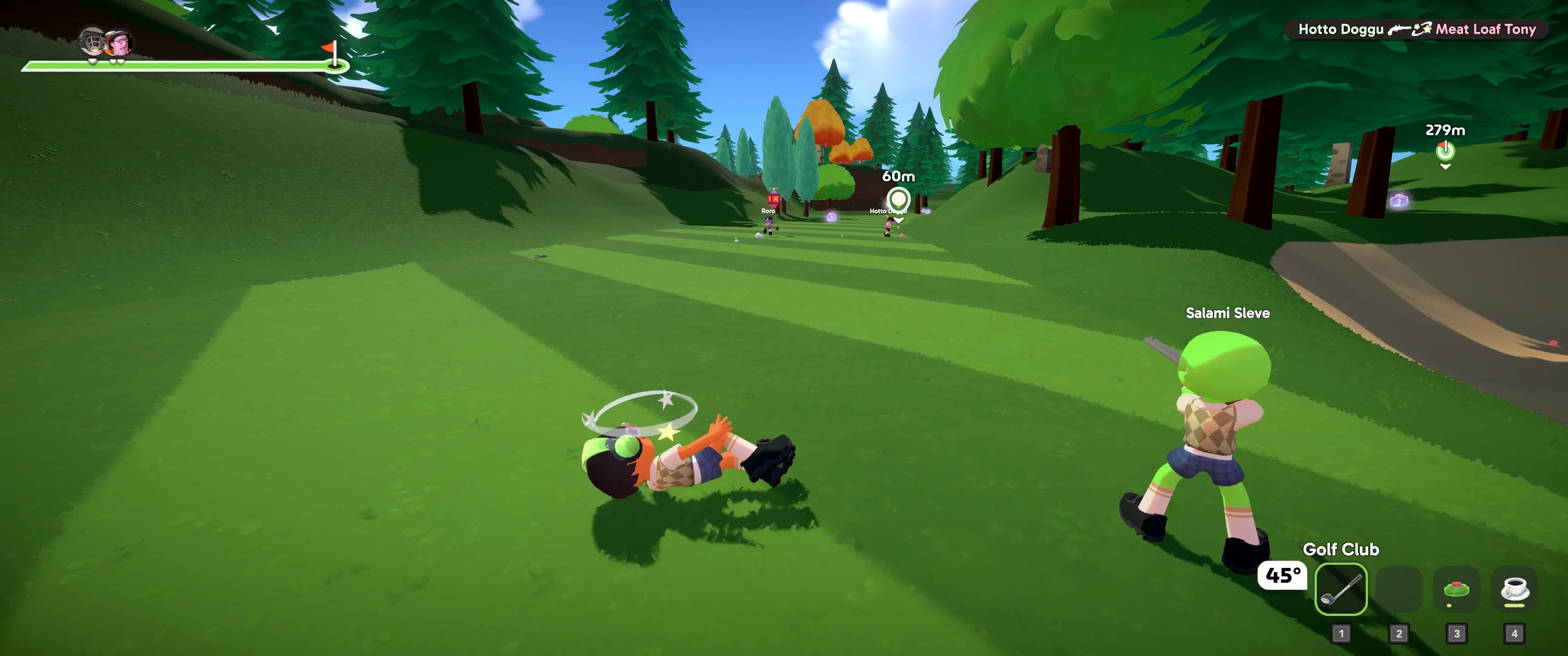
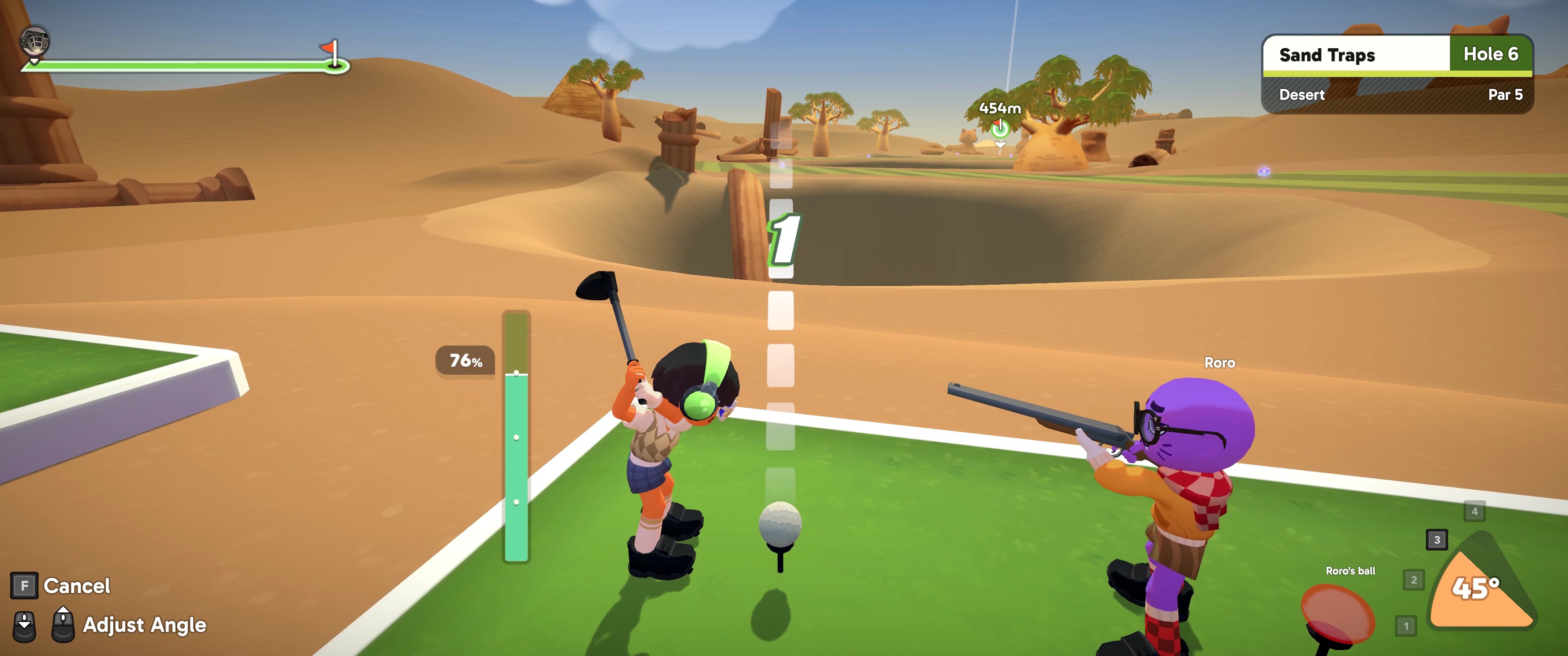
Over two decades later, along comes Super Battle Golf to heal my long-festering disappointment. I also picked it up for a pittance for 6.39 (which, as we’ve learned, is basically five bucks according to the PEAK devs) and I could not be happier with it. This game is a madcap race to the fairway between you and up to 7 of your friends, all the while people are smashing your kneecaps with their clubs, shooting at you with pistols or elephant guns, or running you down with a golf cart. It’s all very slapstick and it’s been a while since a game has made me laugh like this one has.
I can’t wait to play more. What else can I say? It’s basically five bucks. Go get it.
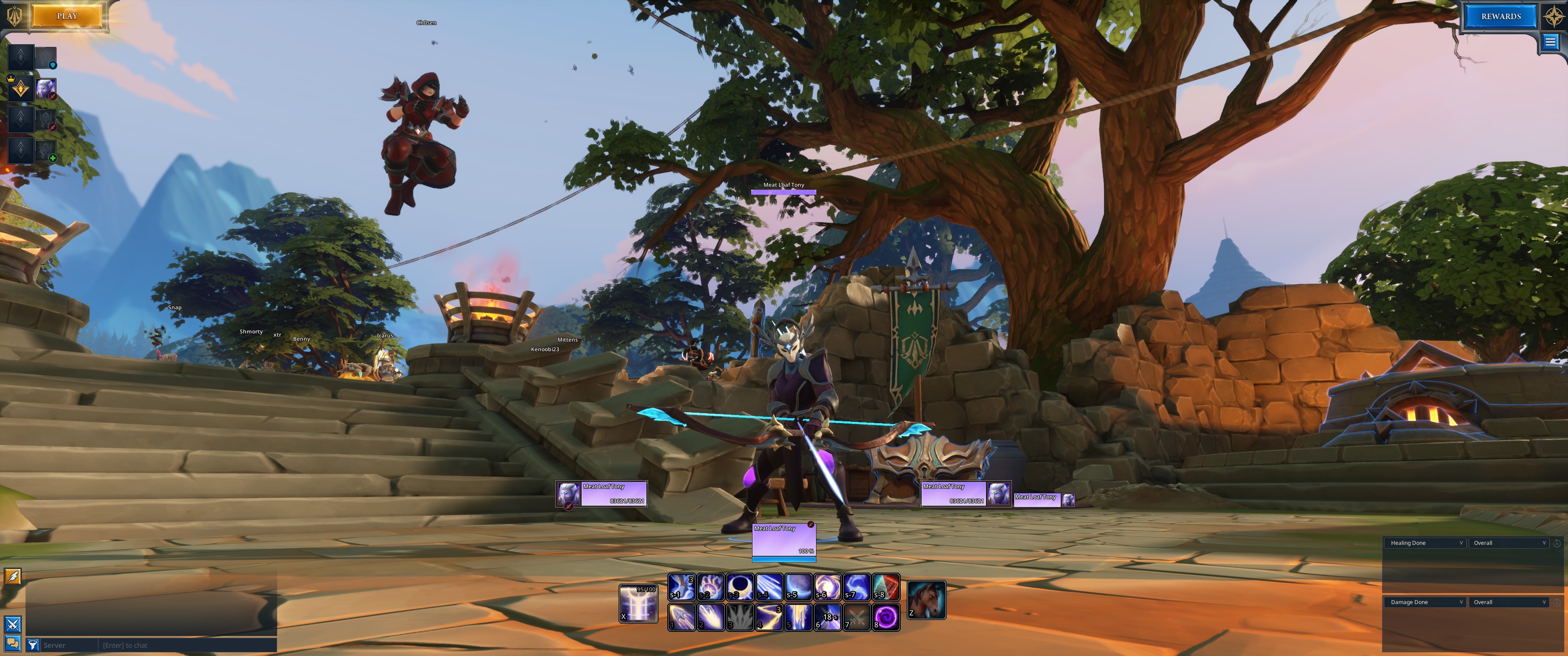
World of Warcraft’s Mythic+ dungeon mode is genuinely one of the best things they’ve ever added to the game. It provides a (theoretically) infinitely-scaling dungeon challenge for you and 4 other allies, which is far more accessible than putting a whole raid group together. Having run a WoW raiding guild during the days of Vanilla and early TBC, I can most definitely say that’s something I would never want to do again. Last year some friends and I decided to get into M+, and after not having played WoW for probably at least 15 years… Boy, things have changed a lot. The game is overstuffed with things to do and learning all the systems and currencies you need to interact with is enough to make your head spin, and at endgame it piles on even more to think about.
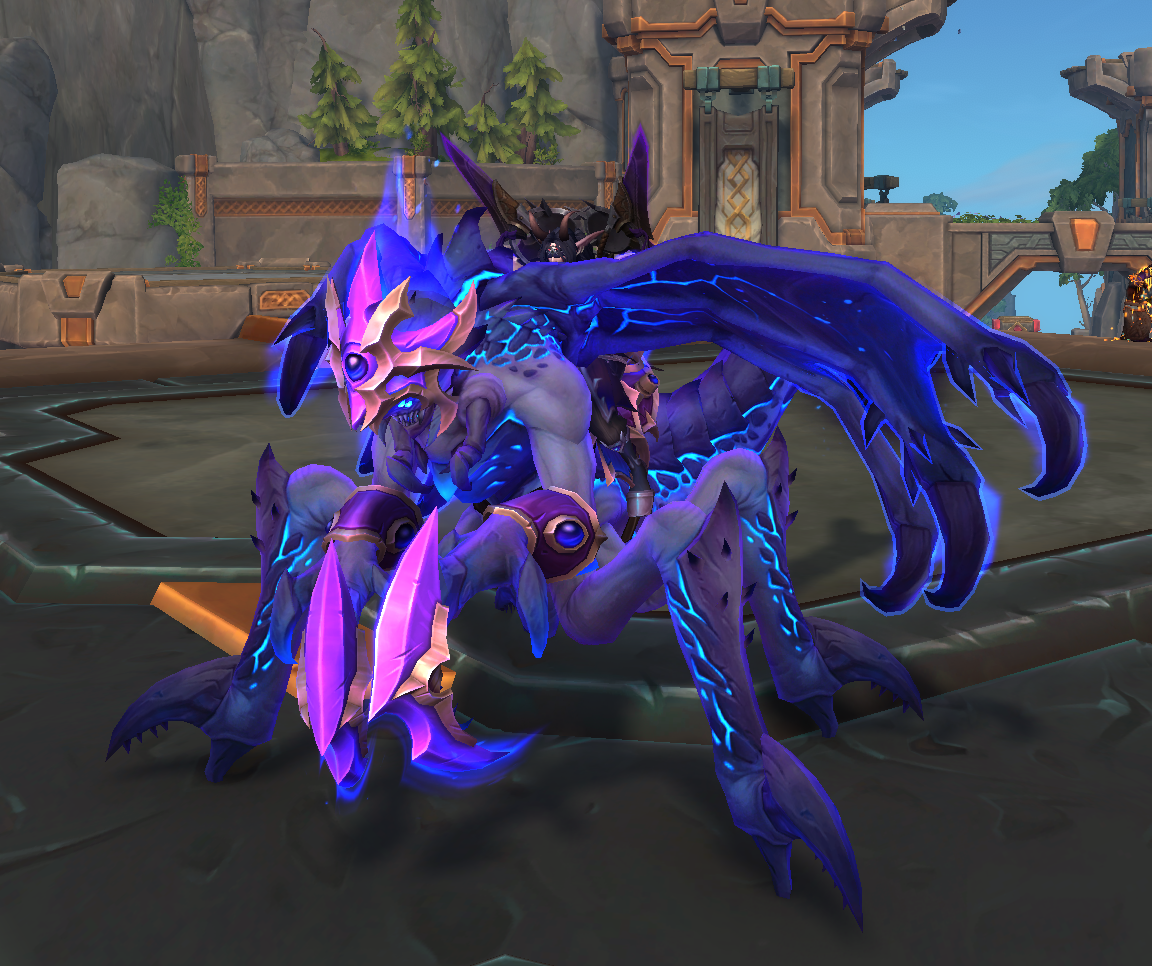
Along comes Fellowship, which distills the M+ experience into a standalone package. There’s no grinding to level cap or gearing up before you can get to the good stuff, just choose one of a roster of heroes, find a group, pick a difficulty, and go. I do miss the character customization inherent to a proper MMORPG (I grew quite attached to my Demon Hunter, Brymmleaighe), but the heroes in Fellowship serve well enough in their archetypes and most mirror existing character classes from other similar games. It feels very familiar in a positive way; if you’ve ever done M+ you’ll be able to slide right into Fellowship with no problems. It’s still early access and needs some polish, but seems to be moving in the right direction.