
Cover photo from The Hundred Line - Last Defense Academy.
Welcome to the January 2026 Roundup, a collection of brief thoughts about the various games I’ve been playing this month. Given that a full review is a lot of work to put together, I think this is a nice compromise, almost like a game journal. I imagine this will be a bit longer than its successors, as I also wanted to talk about several games I tried during my extended vacation at the end of last year. I’ll begin with my favorite of the batch…
|
91
|
|
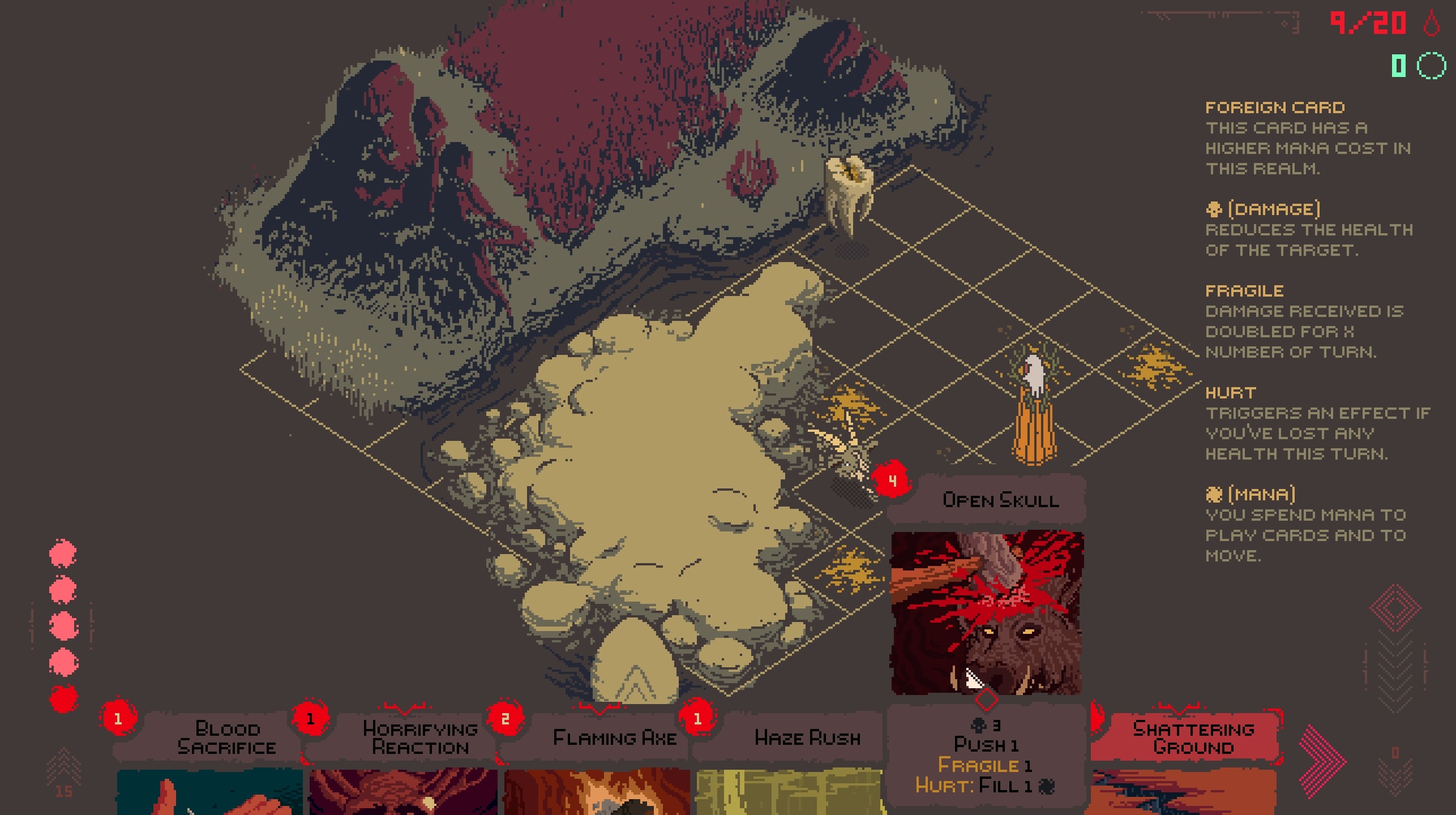
A pleasant surprise toward the end of 2025, Death Howl is a tactical deckbuilder game in which the protagonist Ro travels through a fantastical and dangerous spirit world on a journey through loss, grief, and acceptance. The build synergies are excellent, the art is eye-catching, and I highly recommend it even to those like myself who aren’t typically into deckbuilders.
I wrote a full review of Death Howl which can be read here..
|
88
|
|
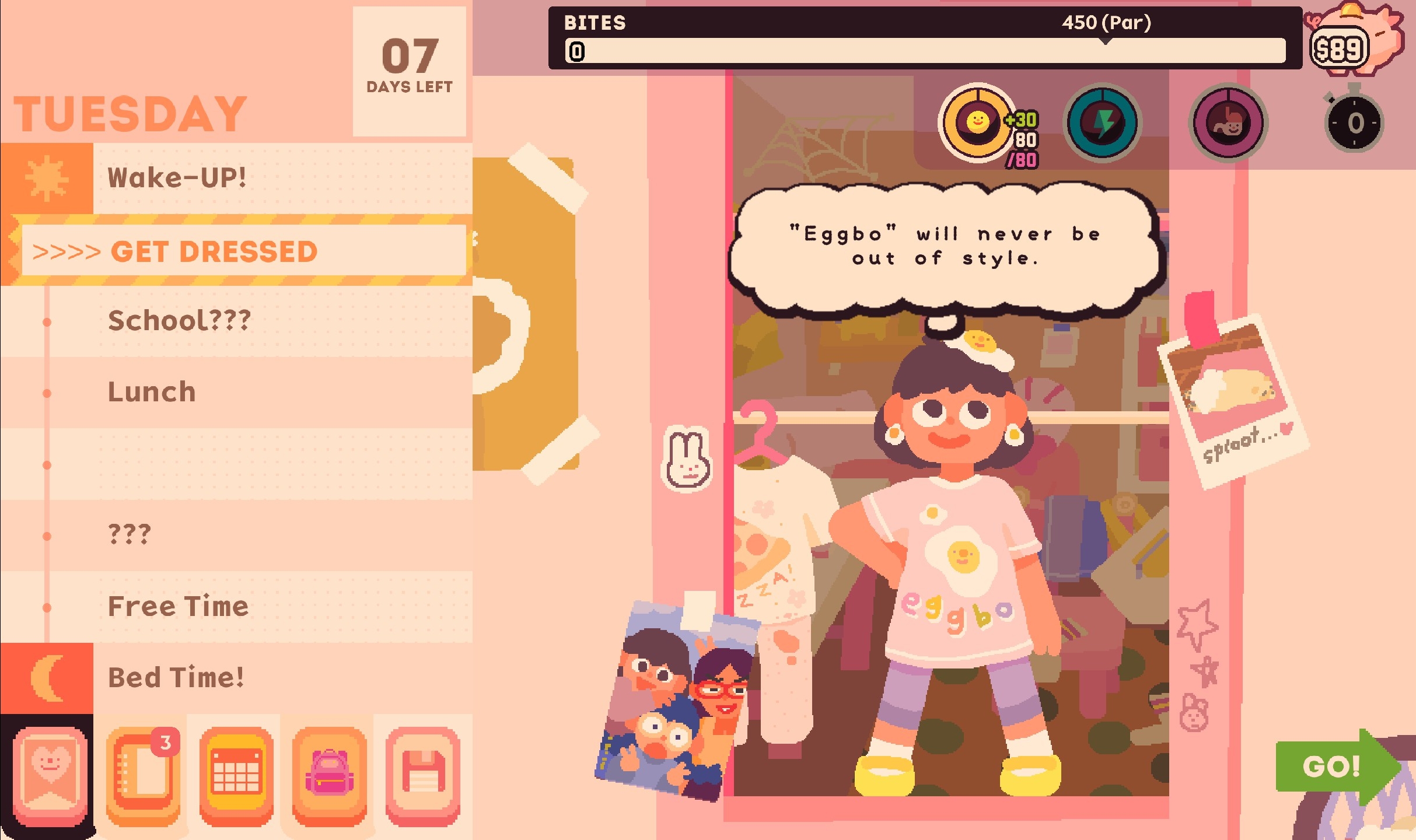
A really great slice-of-life game that also manages to be very relatable. Consume Me is based on developer Jenny Jiao Hsia’s personal experiences in high school into college but I think it will also resonate with anyone who has ever gone on a crash diet and painstakingly counted calories in order to lose weight. The game deftly handles some pretty heavy subject material including disordered eating and an unhealthy obsession with hyperoptimizing every element of life. This is not sustainable, of course, and Consume Me does not pretend that it ever can be, showing how everything crashed down around Jenny when it all became too much to juggle. Don’t take this to mean that the game is some sort of dour cautionary tale though; the art is colorful and vibrant and its goofy animations and sharp sense of humor kept me laughing throughout. It’s a brave and risky thing to put so much of yourself into a piece of art, but it came together in a very cohesive, and enjoyable package.
I find that a lot of autobiographical games like this tend to mostly focus on telling the author’s story and are light on actual game mechanics. Consume Me is a notable exception here; practically every action in the game is associated with a WarioWare-esque minigame, whether that be folding the laundry, putting together a healthy lunch, walking the dog, or trying to keep Jenny’s wandering eyes on her assigned summer reading. All of that is assembled within the framework of a daily schedule in which you’re tasked with putting the right strings of actions together in order to balance Jenny’s energy, happiness, and hunger with getting all of her weekly tasks done. It throws some serious curveballs at you, especially in later chapters. Part of Chapter 5 seemed literally impossible at first, but the game subtly nudged me toward the power of unhealthy amounts of caffiene and extraordinarily late nights as a way of gaining near-infinite actions at the expense of Jenny’s overall health and happiness. It’s ludonarrative harmony at its best, where the mechanics reinforce the core themes of the narrative, and overall is a superb balancing act by the developers. It’s a great time, and it comes highly recommended from me.
|
65
|
|
Imagine an esport in which all of consideration of balance is removed, where the RNG is always perfectly fair and everything comes down to 50/50 odds. Well Q-UP literally does this, with every round being based around two teams competing over a series of coin flips with each team winning when their selected side comes out on top after the flip. The game is a tongue-in-cheek work, poking fun at esports devs fruitlessly pursuing that unattainable moving target of Perfect Game Balance.
There are character classes to pick from as well as skill trees… Why, you ask? Because in the end this is a classic “number go up” type of game, where you tailor your selected skills to emphasize the strong points and cover the weaknesses of your selected character. It didn’t quite hit for me, but I could see this being enjoyable to people who love spending hours buildcrafting and sitting back while their chosen strategy pays off, launching their score into the stratosphere. I will say that the humor in the game’s UI, item flavor text, and fake emails from the corporation behind Q-UP is all very funny if you follow the internal workings of the games industry. It’s not quite enough of a game to keep me coming back to it, but its sharp and humorous evisceration of modern esports did have me laughing.
|
80
|
|
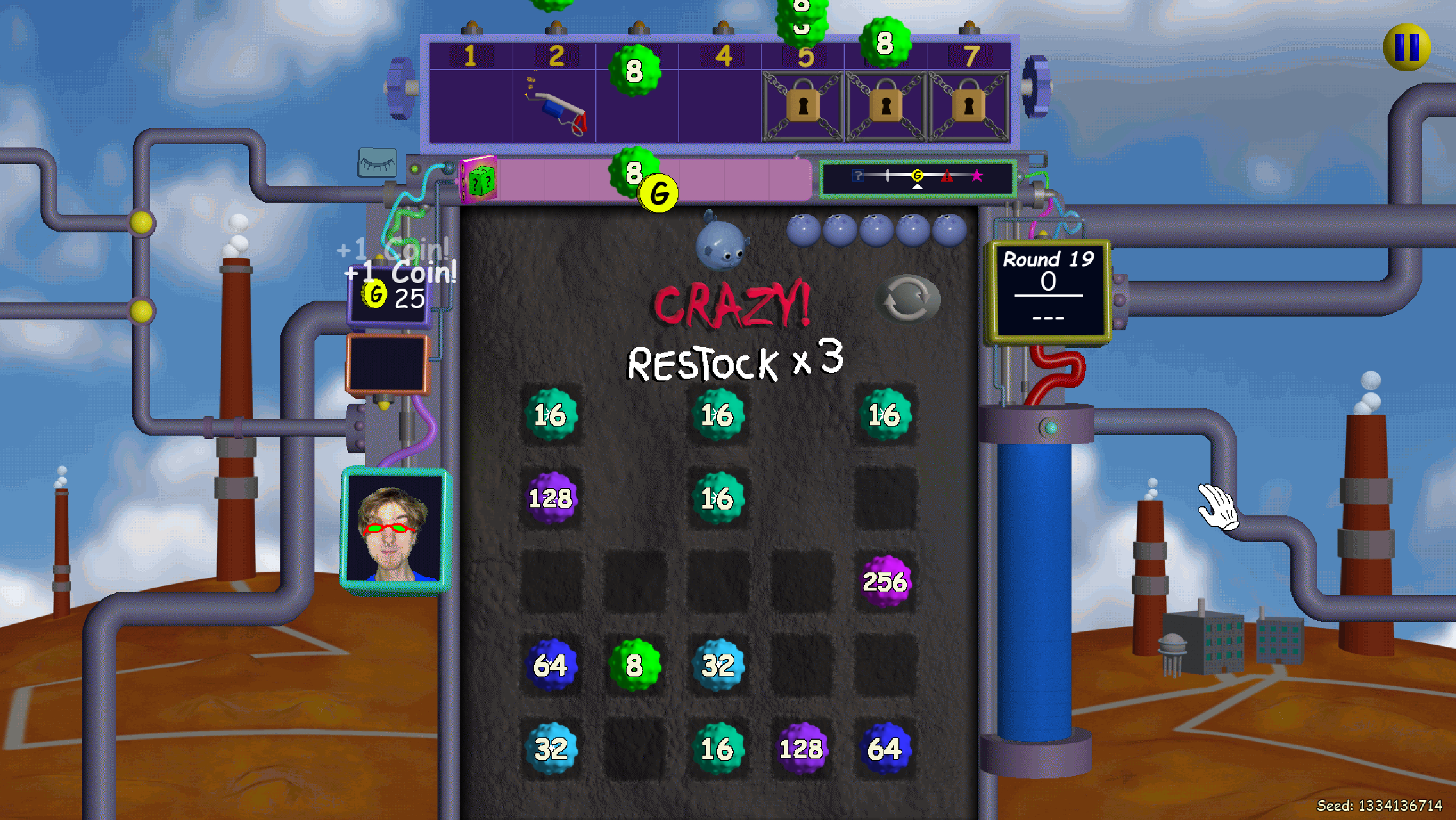
The Price is Right was basically late-morning white noise in my household growing up, a pleasant distraction between the early morning news/talk shows and the afternoon soap operas ubiquitous to network TV. I think most people who saw it will remember Plinko, the game where the contestant climbed to the top of a tall pegboard and dropped a bouncy disc which would eventually settle into a cradle at the bottom corresponding to various amounts of money and prizes. I’m confident in saying that the dev behind Nubby’s Number Factory also remembers Plinko, because it marries that basic setup of a bouncy object plinking around a board with a run-based buildcrafting system. It reminds me a lot of Balatro in that way, but instead of creating poker hands you’re launching the eponymous Nubby at the pegs below, trying to create a perfect series of bounces that will rack up a boatload of points. It’s become one of those games I’ll fire up when I need to play something that doesn’t require a ton of brainpower (more common than I’d like lately) and is a fun, welcome distraction from.. Well, motions at everything. It also looks like something straight out of the 90s edutainment software aesthetic which is yet another point in its favor.
|
84
|
|
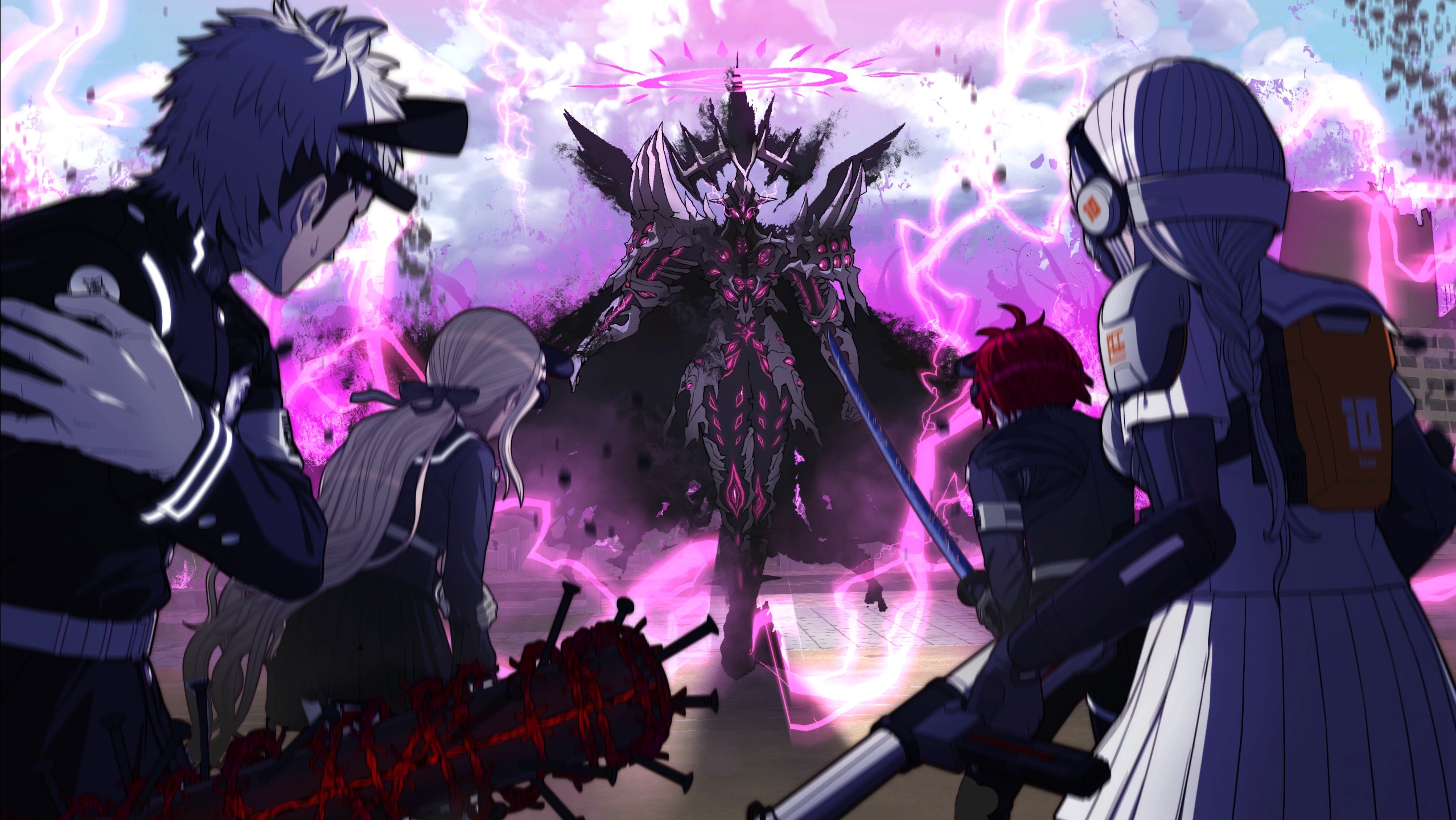
This is an ambitious, anime-styled hybrid of a visual novel and a turn-based tactics game from the developers who brought you the Danganronpa and Zero Escape series. A group of high school students are whisked away from their normal lives to the titular Last Defense Academy and chosen to defend a secret at the heart of the school that could be the salvation or doom of humanity. The narrative is vast and branching with 100 different potential endings, and I am still working my way through some of the late-game scenarios I want to see. I’m really enjoying it overall and have a lot of thoughts, so I plan to write a full review article for this soon. Stay tuned.
|
82
|
|
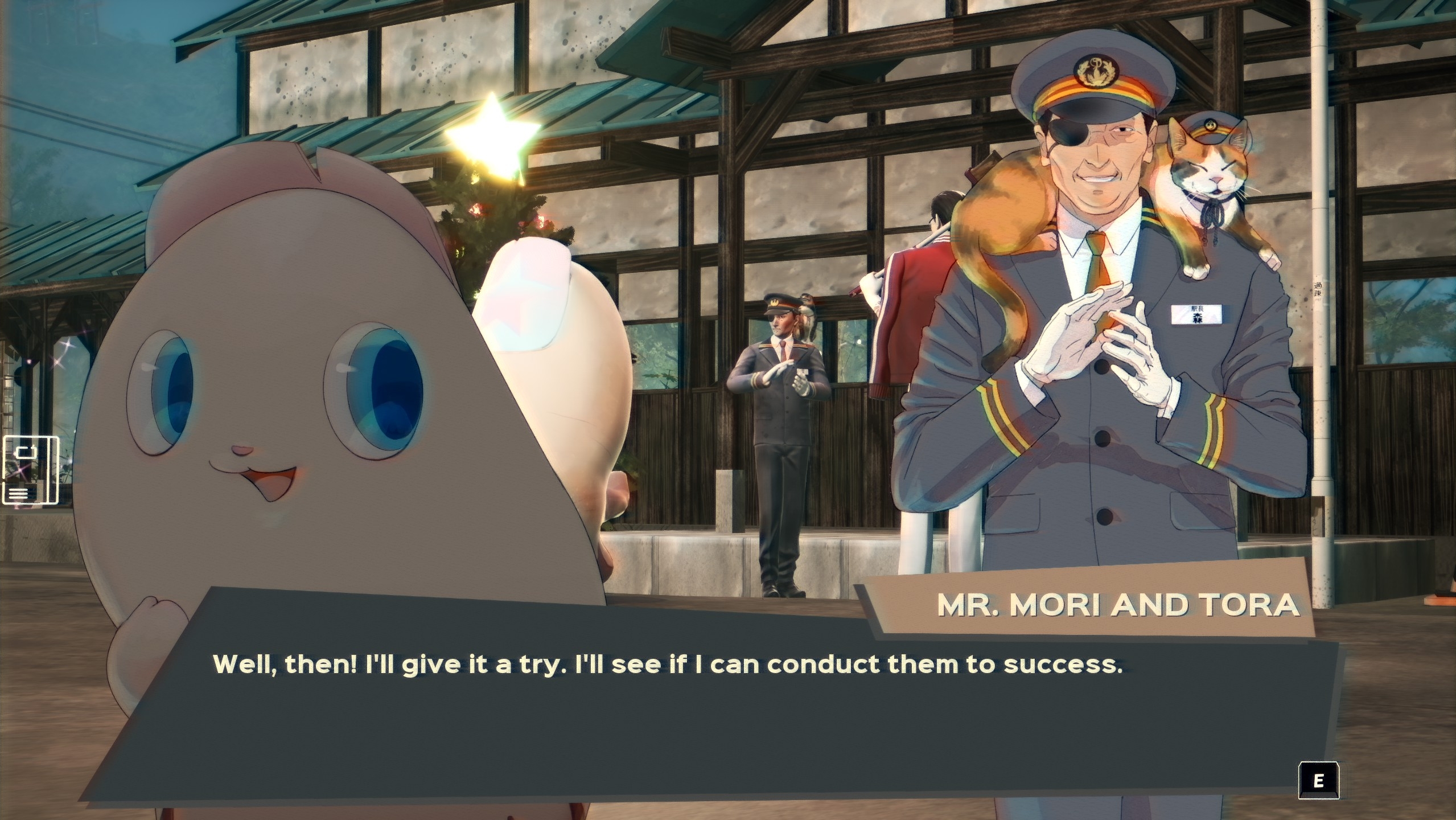
”Former Yakuza enforcer is exiled to the countryside to run a contracting agency for bizarre mascots” is one of those game pitches that sounds like it came right out of a fever dream, and ultimately was one I couldn’t pass up. This game comes from Kaizen Game Works, developers of the well-regarded murder mystery game Paradise Killer. It leans into and pokes fun at all of the typical yakuza tropes, and leans so far into this bit that they were actually able to get the japanese voice of Kazuma Kiryu, Mr. Yakuza himself Takaya Kuroda as the main character Michi AKA “The Janitor.” After disgracing himself and putting his yakuza family in financial ruin by botching a major financial transaction, Michi’s death is faked and he is sent to the rural town of Kaso-Machi to redeem himself by restarting a long-dormant mascot agency and making as much money as he can for the family.
Mascots in this world aren’t simply people in costumes, they’re supernatural life forms who take on all sorts of shapes and personalities. Michi’s main assistant and primary companion is Pinky, a brash and hilarious mascot in the shape of a giant severed fingertip. I really was not exaggerating when I called this concept a fever dream. Fortunately, the mascot and human characters you meet in Kaso-Machi are charming and often very funny. You’ll spend most of your gameplay driving around in Michi’s nigh-indestructible all-terrain kei truck, assigning mascots to jobs around the town, and unraveling the mystery surrounding a yakuza-killing curse purported to be on the town. I was struck by the quality of the narrative, the charm of the various oddball mascots (business cat Salary-Nyan and sentient foodstuff To-Fu being my favorites), and the sheer density of things to do in Kaso-Machi. This is an open-world checklist game à la Assassin’s Creed with tons of stuff to do on the map, but remarkably it is condensed into a fraction of the time any of those games take to play. I hit 100% achievements and saw most of what the game has to offer in a tight 18 hours, and I can’t help but feel like modern, bloated open-world games should take notes from it. I typically don’t play those types of game specifically because they are so overstuffed, so Promise Mascot Agency was really a breath of fresh air and made me believe they could be more focused and probably better overall for it.
|
TBD
|
|
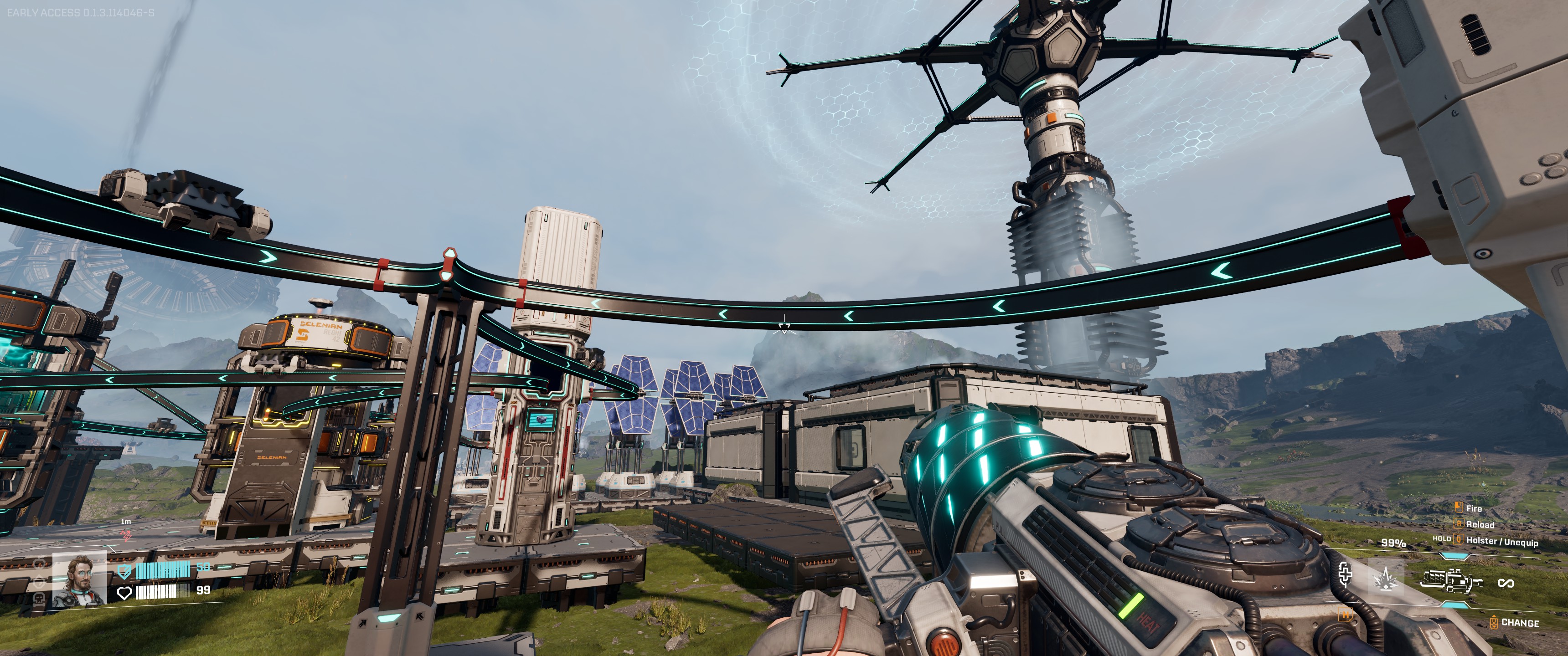
”It’s basically Satisfactory,” say all of the reductive takes on the internet. Well, ok, they’re not completely wrong. StarRupture definitely shares the same DNA as the factory-genre giant (and personal favorite of mine), but in my brief five hours with it I found that it is trying to differentiate itself through its greater emphasis on combat with native fauna, its deeper characterization with its main cast of interstellar indentured prisoners, and of course the cycle of the nearby star erupting and the planet regenerating from its damage. I’m not sure how engaging that cycle is after the first couple of times you see it or how well-realized the characters are (the voice acting could use some work) but it’s VERY early access so I will reserve judgment. Generally my policy on early access games is that I’ll play it for a short time and then shelve it until 1.0 as long as I think it’s got potential. All the essential elements for something fun is there, so hopefully this team is able to fully develop and mesh them together over time.
|
TBD
|
|
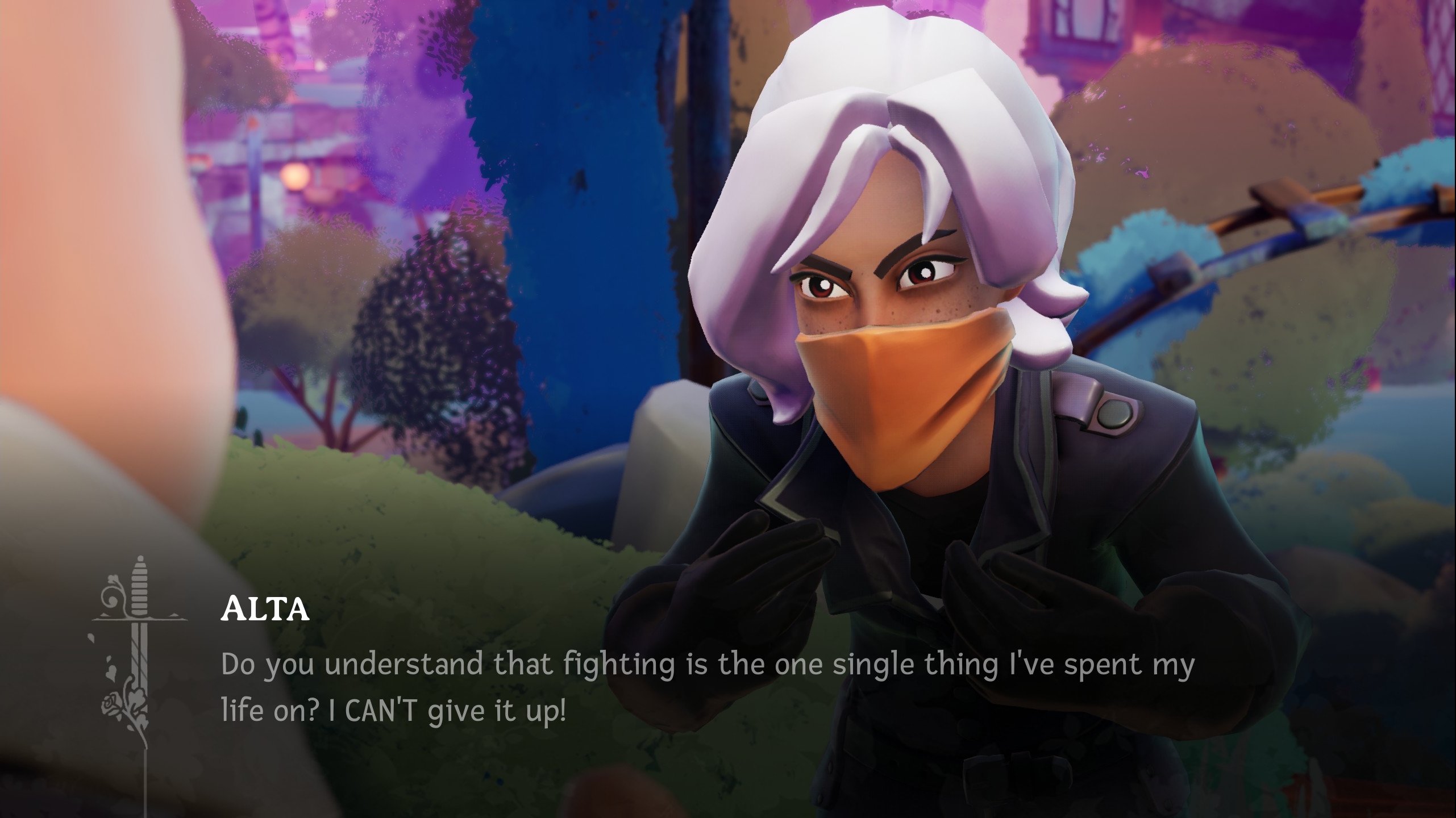
Not much to say here yet because I’m still early on in Wanderstop, but I’m already charmed by its characters and earnest approach to the subject of burnout. The main character Alta is acutely dealing with this after her career as a gladiator takes a precipitous dive after years of being undefeated. After collapsing in the woods while looking for a legendary warrior to re-train her, Alta is forced to slow down and acknowledge that sheer effort is sometimes counterproductive. The gameplay revolves around Alta helping to run a tea shop in the woods while she recovers and heals, and is a narrative about life changes and healing. It’s charming so far and I’ve found it to be well-written and relatable. I’ll report back after I’ve seen more of what it has to offer.